

Key Takeaways:
- Colour alone does not make a green rug look like moss.
- Raised pile and subtle height changes cast shadows that flat colour cannot create.
- Several green tones give the surface more depth than one uniform moss green.
- Rounded or irregular edges stop the rug reading as a neat block of colour.
- Round rugs, runners, larger rugs and small irregular designs change how the moss effect sits across the floor.
- Moss rugs offer a woodland route into cottagecore for rooms that do not need obvious florals.
When people describe a rug as mossy, they are rarely talking about colour alone. Plenty of green rugs contain moss green tones but never really resemble moss once they reach a room. The designs in our Moss Rugs Collection rely on texture, shape and colour variation, with shade forming only one part of the picture.
The quickest test is to look past the shade. A convincing moss rug needs variation across both the surface and the outline, so the eye notices depth before it settles on green. Texture, tonal shifts and a less rigid shape then build the woodland reference together.

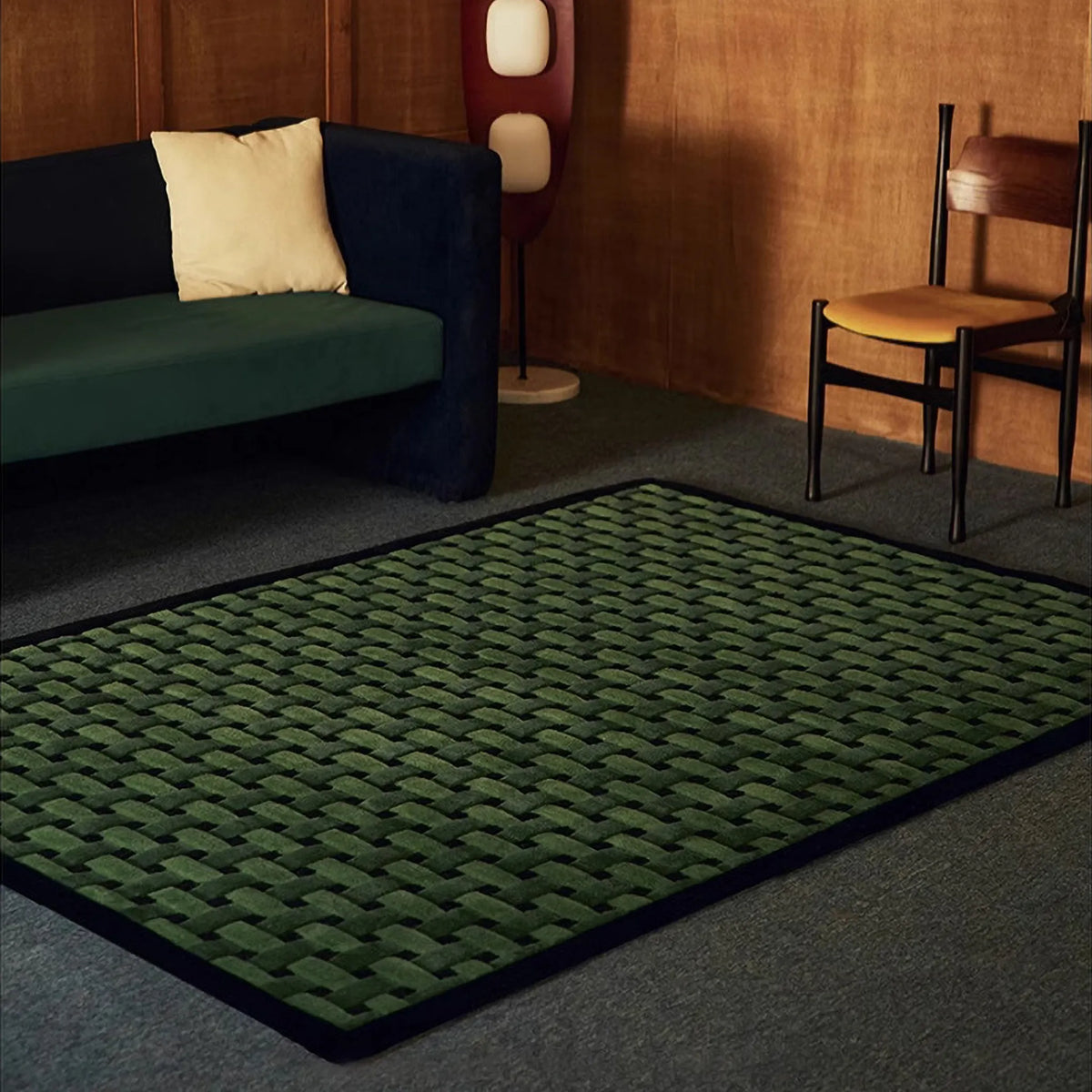
Layered green moss rug with an uneven tufted surface and organic outline.
Why some moss rugs look like moss and others do not
Green is usually the first thing people notice in a moss rug, yet similar shades can produce very different results. One rug reads mainly as colour. Another begins to resemble moss because light moves across an uneven surface, revealing denser patches, shallow dips and changes in pile.
A plain green surface stops at shade, while a moss-inspired design keeps changing as the eye moves across it. Some patches appear denser, others recede into shadow, and the boundary moves away from the tidy geometry of a standard rug.
The effect recalls a woodland floor after rain, where growth gathers unevenly and colour shifts with the surface. A moss rug only needs to borrow those visual cues. A literal moss print or garden-mat appearance can make the reference too obvious.
Why organic shape matters in moss-inspired rugs
Some green rugs remain too geometrically controlled to suggest natural growth. Moss creeps around stone, gathers in dense patches and thins at the edges, while a rigid rectangle places the colour inside one clean boundary. The outline can weaken the woodland reference before texture and tone begin to support it.
Rounded corners and irregular boundaries bring some of that looseness indoors. The shape need not be dramatic. Even a slightly broken edge can stop the rug looking like a cleanly cut piece laid on top of the floor.
Marlow Deep Green Mossbank Irregular High Low Tufted Rug shows how much work the outline can do. Its uneven perimeter spreads like a small patch of ground cover, while deep greens and sculpted pile add density inside the shape.
Green works best when it is layered, not flat
Moss colour needs contrast within the palette. When every part of the pile carries the same visual weight, the eye registers the shade as a single field of green. Darker and lighter areas create the impression that some sections sit deeper while others rise towards the light.
Real moss moves through deep pine, dark moss, olive, muted sage and brighter new-growth greens. A rug can build similar variation through neighbouring shades, with occasional mint, lime, leaf green or soft cream details lifting selected areas.
Darker sections appear denser, while lighter tones bring the upper surface forward. Colour begins to create relief before the changes in pile are even touched.
Across Elowen Mint Green Woodland Irregular High Low Tufted Rug, mint and moss tones move into deeper green sections instead of holding one consistent shade. The lighter areas lift parts of the pattern, while darker patches add visual density. Its carved pile and irregular outline then extend that variation beyond colour.
Why high-low tufting makes a moss rug look more natural
High-low tufting turns the uneven appearance associated with moss into part of the rug's construction. Raised yarn catches more light, carved channels create narrow shadows, and lower sections give the design a denser base. The changes remain visible even when neighbouring areas use similar shades of green.
Printed rugs can reproduce moss colours and patterns, but the image stays close to one surface level. In a tufted moss rug, the relief comes from the pile itself, so its appearance changes with the viewing angle and light. Our Tufted Rugs vs Printed Rugs guide explains how these two constructions behave beyond the moss look.
Alder Green Blue Pondside Irregular High Low Tufted Rug places blue-green and mossy tones across raised and recessed sections. As the viewing angle changes, the sculpted pile reveals different shadows, allowing the construction to carry as much visual weight as the palette.
Where the mossy forest floor look works best at home
A moss-inspired rug can turn an unused area of floor into a defined patch of colour and texture. Its uneven surface introduces the suggestion of woodland ground cover on a smaller, more usable scale.
Bedrooms give that effect a natural boundary. Beside the bed, a moss rug can fill an empty strip of floor with layered green and a softer landing, while an organic outline prevents the placement looking boxed in. It brings more surface detail than a plain bedside mat while allowing the rest of the room to remain simple. Pale wood, linen bedding and a few houseplants can carry the woodland palette through the space without turning the bedroom into a themed interior.
Reading corners and smaller living areas offer another contained placement. A compact irregular rug can sit beside a chair or beneath a small table, bringing green into the corner while leaving the surrounding floor visible. The limited footprint keeps the moss reference focused on one part of the room.
Round designs can strengthen that moss garden feeling because they move away from the structure of a standard rectangle. Merryn Green Moss Garden Round High Low Tufted Rug is a good example. The circular shape resembles a defined patch of ground cover, while layered greens and tufted detail build depth across the surface. It works especially well beside a reading chair, near a window seat or in a bedroom corner.
Moss-inspired rugs also offer a woodland route into cottagecore, especially when a room uses natural colour and texture but does not need obvious floral motifs. In What Makes a Rug Cottagecore? Florals, Moss and Natural Texture, we look at how mossy surfaces sit alongside flower shapes, botanical details and natural fibres within the wider cottagecore style.
What types of moss rugs are people usually looking for
Searches for moss rugs often point to different visual priorities. A rug that looks like moss may use clustered green patches and a clear forest floor reference, while a textured or tufted moss rug relies more heavily on uneven pile and tactile depth.
Format changes how the idea occupies the floor. A round moss rug resembles a garden patch, keeping the design centred within a circular shape.
A narrow moss runner stretches the reference into more of a trail. It can follow a hallway, fill the side of a bed or bring texture to a long section of otherwise bare floor.
On a larger moss green rug, colour takes up more of the room. Variations in pile and tone then become especially important, since one uniform green across a wide area can appear heavy or visually flat.
Small irregular designs create the loosest version. Their broken boundaries suit compact areas where a standard rectangle would occupy too much floor or introduce another rigid edge.
How to choose a moss rug for a real room
Start by deciding how clearly you want the woodland reference to appear. An irregular outline and strong pile variation create a more immersive forest floor look, while a round shape or quieter green palette keeps the effect contained. The best choice depends on whether the rug should lead the room or bring texture to one smaller area.
For a wider look at how moss green sits alongside other ways of using green, read Why Green Rugs Are Becoming the Easiest Way to Add Life to UK Homes, which moves from moss textures into leaf shapes, daisy rugs and broader green room styling.
Looking for rugs that look like moss? Visit our Moss Rugs Collection for textured, round and irregular designs shaped by layered greens, sculpted pile and forest floor references.


0 comments