

Key Takeaways:
- Small bedroom rugs work best beside the bed, especially in UK bedrooms where a full-size rug can feel awkward or too large.
- A bedside rug gives cold wood, laminate or tile flooring a softer landing without changing the whole room.
- For a simple bedside spot, look at 50×80 cm or 60×90 cm. For a longer strip beside the bed, try 45×120 cm or 60×120 cm.
- Plush tufted rugs with high-low pile add softness, texture and shape, making small bedroom rugs feel more considered.
- Green rugs, wavy rugs, irregular rugs and graphic rugs can all work in bedrooms when the rest of the space stays calm.
- Moss rugs are becoming a fresh bedside choice, bringing green, texture and a softer organic outline into compact bedrooms.
Bedroom rugs do not have to disappear under the whole bed. In plenty of UK bedrooms, there is barely any floor left once the bed, wardrobe and bedside table are in place. Add a full-size rug, and suddenly the whole room becomes a measuring exercise, with door clearance, drawer space, the narrow walkway by the bed and the bit where the radiator already makes things awkward.
The better place to start is often much smaller. It might be the side of the bed you actually use, the patch of floor you step onto half-awake, or the bit of bare wood or laminate that always feels cold first thing. Handled well, that small patch beside the bed starts to feel softer without the whole layout needing to change. If you are working with the space beside the bed rather than trying to cover the whole floor, our small rugs are the easiest place to start.


Start with the bedside, not the whole floor
Large bedroom rugs only really work when the room gives them space. In smaller UK and EU bedrooms, once the bed, wardrobe and doors are accounted for, the most useful bit of floor may simply be the strip you walk through every day.
A small rug beside the bed is more direct. It sits where the room needs softness, whether that is one side of the bed, the foot of the bed or the narrow space before a wardrobe. The bed area gains comfort and weight without the whole room feeling planned around one rug.
This is the same small-space logic behind Small Rugs for UK Flats That Make Compact Spaces Feel Intentional. Placed with a clear job in mind, even a modest rug can make a compact room feel more considered.
Colour and shape ideas for small bedrooms
Once the bedside area makes sense, colour and shape decide what kind of small bedroom rug it should be. At Housenfriends, that does not always mean choosing the quietest option first. Green can make the room feel more natural, wavy edges can soften the furniture lines, neutral tones can calm the floor down, and graphic or irregular designs can add character where the bedroom feels too plain.
Green rugs for bedroom
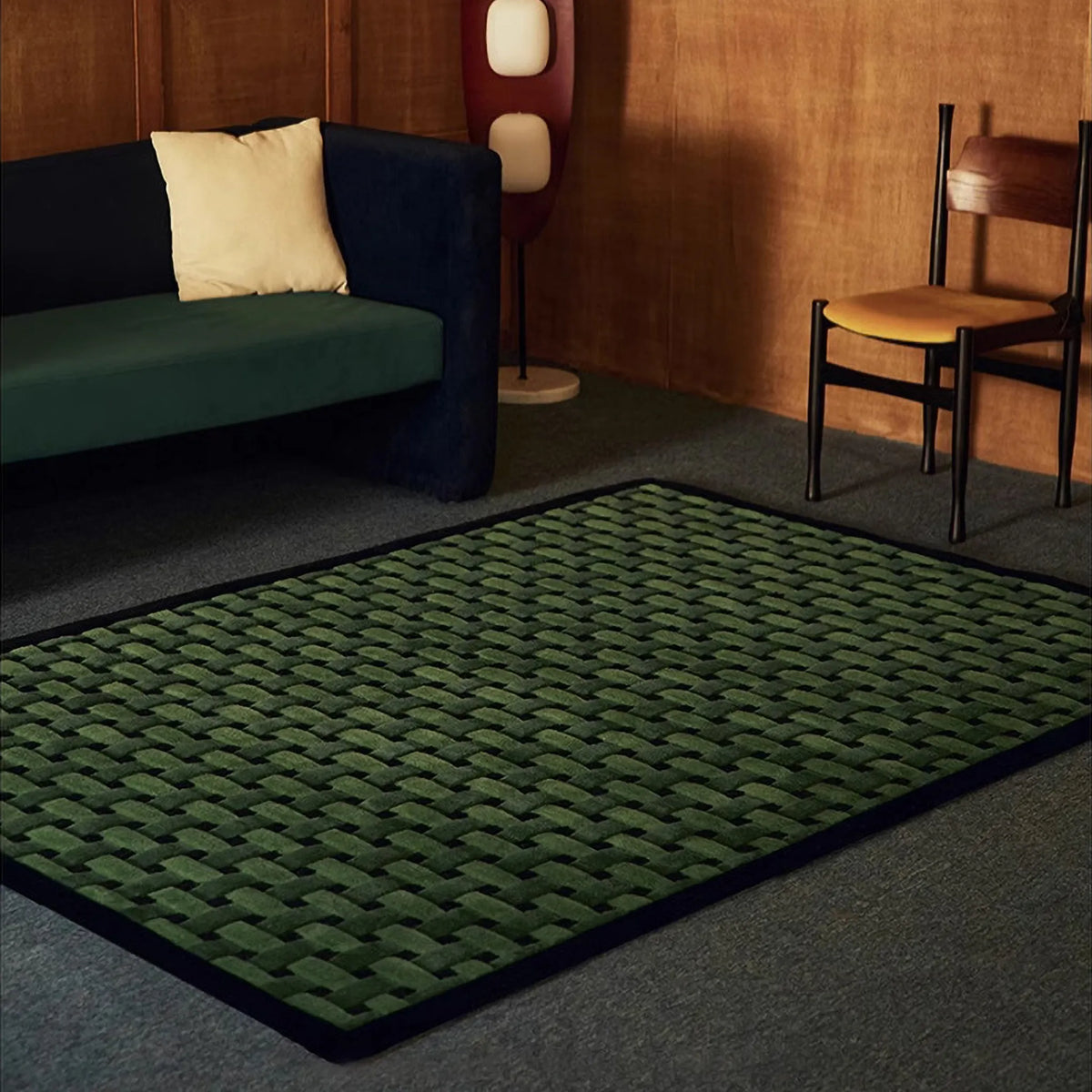
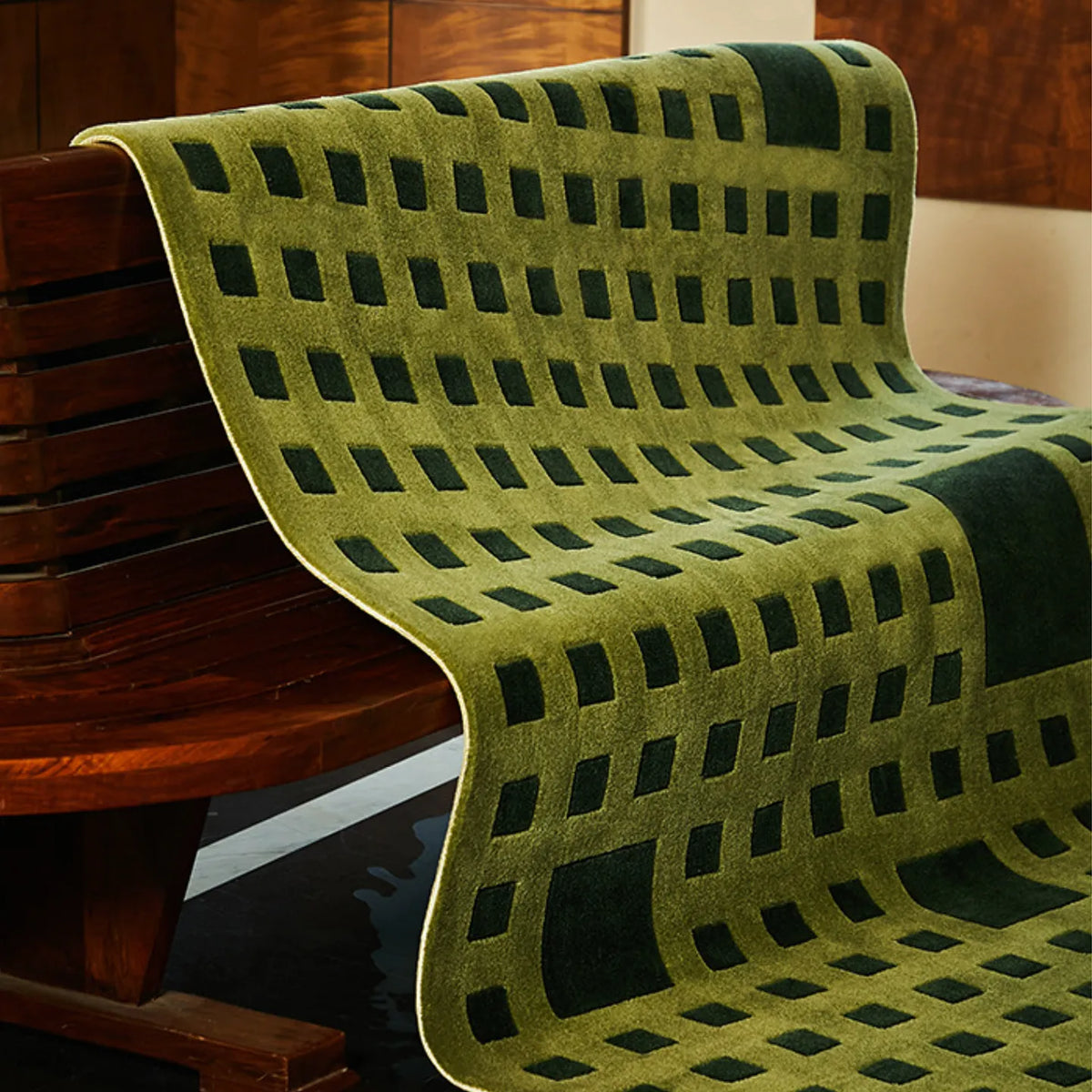
Green is useful beside the bed when colour needs to feel calm rather than decorative. Moss, olive and woodland greens sit well with white bedding, wood furniture, cream walls and the softer grey light many UK rooms get for much of the year.
The shade does not have to be bright to matter. Softer greens often work better in small bedrooms because they bring in colour without making the room feel louder. Maisie Green Daisy Flower Shaped Tufted Rug (80×80cm, 100×100cm) is a gentle example here, with enough green to freshen the bedside area and a daisy-shaped floral outline that keeps the room feeling soft.


Wavy rugs for bedroom
Wavy rugs for bedroom spaces make most sense when the room has too many straight lines. Beds, wardrobes, windows and walls are all rectangular, so a curved edge can soften the floor without adding a busy print.
Beside the bed, that softer outline also feels less formal than a standard rectangle. In a small room, it helps break up the feeling that every hard edge is lining up too neatly. A longer piece like Alba Sand & Cream Wavy Edge High Low Tufted Runner Rug (74×180cm) can follow one side of the bed and soften the line without bringing in strong colour.


Neutral bedroom rug
Neutral works best when the bedroom already has enough going on. Bedding, curtains, wardrobes and wall colour can all compete in a small space, so a quieter rug helps calm the floor without making the room feel plain.
Cream, beige and soft off-white tones usually work well beside the bed because they keep the area light. In small UK bedrooms, that matters when a darker rug might feel too heavy but a bare floor still looks unfinished. Eira Off White Irregular Cloud Patch High Low Tufted Rug (80×80cm, 100×100cm) keeps the palette light, but the irregular shape and plush high-low texture stop it from feeling flat. The Alba Sand & Cream Runner Rug mentioned above could also do the trick here, especially if you want a neutral palette with a longer bedside line.


Graphic rugs for bedroom
Graphic rugs need a bit of breathing room, even when the rug itself is small. They work best with plain bedding, calm furniture and not too many other prints nearby.
Beside the bed, a small graphic piece is easier to handle than a room built around one strong pattern. It adds character where the bedroom feels too plain, but it should probably be the clearest thing on the floor. Dalmatian Yellow Outlined White Dog Shaped Tufted Rug (60×140cm) does that in a playful way, with a strong outline and enough personality for a small bedside spot. The same playful logic runs through our animal rugs collection, where shaped designs add character to a plain bedroom corner and still feel easy to live with.


Irregular bedside rug
Irregular shapes help when the room itself is slightly awkward. The bed might sit close to the wall, the wardrobe might cut into the walking space, or a strict rectangle might make the floor feel more boxed in.
A softer outline relaxes the bedside area and makes the rug feel chosen for that exact patch of floor, rather than squeezed in because there was nowhere else to put it. Orla Blue & Green Floral Shaped High Low Tufted Small Rug (80×120cm) fits that idea well. The floral shape gives the floor movement, while the size still makes sense next to a bed. For more flower-shaped pieces with soft tufted outlines, explore our floral rugs collection.


Pastel rugs for bedroom
Pastel rugs for bedroom spaces are softer than graphic rugs, but they still bring colour into the room. Muted pink, pale blue or soft yellow can lift the bedside area, especially when the furniture is simple and the bedding is neutral. They can also lean into a cottagecore mood when the colours stay soft and gentle instead of tipping into sugary.
Used beside the bed, pastel stays controlled. Across the whole room, it can start to feel too sweet or too much. With Seren Pale Blue & White Half-Moon Cloud Tufted Rug (50×80cm), the colour stays light and the half-moon shape keeps it from looking like a standard bedroom rug.


Moss Rugs Are Becoming the New Bedside Soft Spot
A vivid moss rug beside the bed feels surprisingly fresh right now. Most bedside rugs are pale, fluffy and quiet. A moss rug still gives you softness underfoot, but it brings in green, sculpted texture and a slightly wild edge, so the floor does not read as empty space.
Beside white sheets, pale walls or simple wood furniture, that mossy patch feels vivid without turning the bedroom into a theme. It gives the bedside area more lift than a plain rug would, while still staying quiet enough for a room meant to feel calm.
A lot of the appeal is in the surface. High-low pile or carved detail makes the rug feel closer to a soft patch of ground than a flat mat. Beside the bed, that matters because the rug is close, visible and felt underfoot, not just seen from across the room.
In a small UK bedroom, moss sits between the obvious choices, less safe than beige, less loud than graphic and less sweet than pastel. It brings colour, softness and shape without needing a large rug or a full room refresh. For this bedside moss rug idea, Merryn Green Moss Garden High Low Tufted Irregular Rug (60×90cm, 80×120cm, 80×160cm) gives the floor that vivid moss-patch feeling, while Elowen Mint Green Woodland High Low Tufted Irregular Rug (90×90cm) keeps the look softer and lighter for a small bedroom.


We talked more about this nature-led way of using rugs in How Floral, Leaf and Moss-Inspired Rugs Add Shape and Life to a Room. For a bedside version of that idea, look through our nature-inspired rugs for pieces that bring green, texture and a softer outline into one small spot.
Where to place a small bedroom rug
Start with the side of the bed you use most, not the side that looks best in a photo. In a narrow bedroom, that may be the only side with proper floor space, and that is enough. If the room is wider, two small rugs can sit on either side of the bed without the cost or bulk of one large rug underneath.
At the foot of the bed, a small rug can help when there is an odd empty strip between the bed and wardrobe. The less obvious places can work too, beside a wardrobe, under a dressing table, near a window chair, or in a corner where a normal rectangle feels too stiff. Bedroom rug placement does not need to follow a showroom layout. It just needs to make sense for the part of the room you actually use.
What size works beside the bed
For bedside use, it helps to think in small rug and narrow runner sizes rather than full under-bed rug sizes. You are not trying to cover the whole room. You are choosing the patch of softness your feet actually reach.
A 45×70 cm rug is enough for a very small bedside spot, especially beside a single bed, guest bed or narrow rented bedroom. 50×80 cm gives a little more comfort underfoot while still staying compact.
A 60×90 cm rug feels more like a proper small bedroom rug. It gives both feet somewhere to land and works beside a double bed, near a wardrobe or by a dressing table.
For the side of the bed, a narrow runner shape can sometimes make more sense than a small rectangle. 45×120 cm works well where the bed runs along a wall or the walkway is narrow, while 60×120 cm gives wider coverage if the room has a bit more space.
An 80×120 cm rug starts to act more like a small bedroom zone. It can sit beside the bed, near the foot of the bed, or under a small chair if the room has a reading corner or dressing area.
A couple of sizes that make sense beside the bed
For a simple soft landing, choose a smaller rug that sits where your feet naturally touch the floor. A 50×80 cm or 60×90 cm rug is usually enough for that. For a longer bedside strip, a narrow runner shape can feel more useful than a wider rectangle, especially when the bed is close to the wall. Look at 45×120 cm or 60×120 cm if you want the rug to follow the side of the bed.
Choosing the right feel underfoot
Beside the bed, softness matters more than it might in other parts of the home. A very flat rug can look tidy, but it may feel a little thin in the one place where your feet meet the floor first, especially with wood, laminate or tile underneath.
Plush tufting suits this spot well. Many small bedroom rugs at Housenfriends have a soft high-low pile. Depending on the design, the thickness usually sits somewhere between around 1.7cm and 3.5cm. The rug feels cushioned underfoot, while the raised and carved areas stop it from looking like a flat piece of fabric on the floor.
That texture also helps in a small bedroom. Neutral tones feel less plain, green looks more sculpted, and wavy edges soften the straight lines of the bed and wardrobe without needing a loud print.
Clearance is worth checking too. If the rug sits close to a wardrobe, drawer or bedroom door, check that it will not catch. Care also varies by design, so it is worth checking the product page before washing. Some styles may be suitable for gentle machine washing, while others are better spot cleaned or hand washed.
Choose the bedside rug by what feels missing
By this point, it helps to look back at the bedside area rather than the whole bedroom. Maybe the floor feels cold, the walkway is narrow, the corner looks flat, or the room needs a little more colour without becoming busier.
For cold flooring, start with softness. For a narrow side of the bed, look at a small runner shape. For a flat-looking corner, choose high-low pile, carved texture or a shaped edge. Colour can do a different job. Green makes the bedside area feel more natural, graphic adds character, pastel keeps things lighter, and neutral is still the easiest choice when the room already has enough going on.
Start with the part of the room you notice most, whether that is one side of the bed, the foot of the bed, a wardrobe corner or a small dressing area. Our small rugs are a simple place to begin when you want to fix one patch of floor rather than rethink the whole bedroom.


0 comments