

Key Takeaways:
- Calm geometric pattern gives a room shape, especially when the layout feels a little loose.
- In grey light, contrast is the risk, dense repeats and hard black and white can feel harsher by evening.
- A grid is often the easiest way to make one room read more clearly when it has to do more than one job.
- Stripes and offset patterns add direction, useful when a walkway cuts through the space.
- A tidy room can still feel messy to the eye, and the fix is often on the floor rather than on the walls or shelves.
- Hallways reward the right footprint, a long narrow runner looks intentional immediately.
- Fix one irritating spot first, then leave the rest alone for a week.
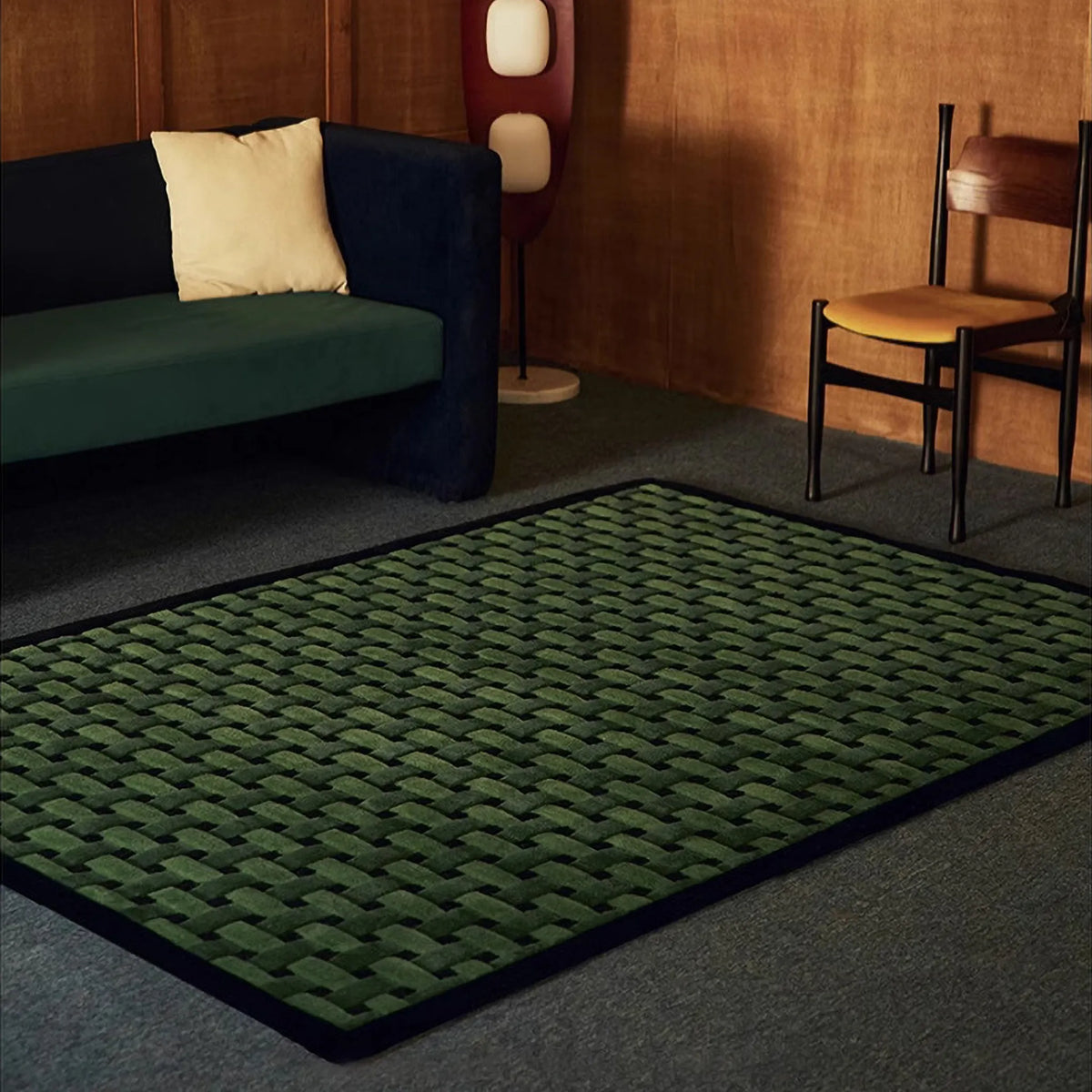
Geometric rugs often get filed under "bold pattern", but the better ones do something more useful than that in real rooms. They give the floor a bit of order, and that often makes a space feel more settled rather than more decorated.
In UK homes, the same room often has to cover more than one function, and the floor ends up carrying more visual weight than people realise. Once that surface looks more settled, the whole room usually follows.
For a quick overview first, the Geometric Rugs collection gives you the full spread. It gives you enough range to compare a few directions properly. Most people aren't chasing a perfect definition. They just want the room to feel easier to live in.


The room feels "floaty" even though everything is in the right place
It's the living room that doubles as a workspace, the dining table parked too close to the sofa, the open-plan layout that works on paper but still never looks fully composed. In flats like that, the problem usually starts at ground level: pale walls, pale flooring, thin daylight, then artificial light taking over before the day properly ends. The furniture can look oddly disconnected, even when the layout itself is perfectly sensible.
A grid often works here because it gives the eye something stable to land on first. It doesn't rely on extra styling tricks. It simply makes the layout look more considered. Studio Black and Cream Modern Grid Cut Pile Rug does that in a grown-up way, strong enough to hold the seating area together while letting the rest of the room stay calm. When the same organising effect needs a lighter touch, Jules Black White Modern Grid Pattern Rug keeps the structure, but lands more gently in a softer room.


The rug looked clean online, then 5pm happened
A geometric rug can look perfect on a bright screen and then feel much harder in the room itself, simply because real rooms behave very differently from shop images. North-facing rooms cool everything down, while warm bulbs can thicken cream tones and sharpen contrast, so the same pattern that looked crisp at noon can feel much less relaxed by evening.
That shift is where a lot of buying mistakes happen. A dense repeat can make a narrow room feel overworked, because the pattern keeps asking for attention. A fiddly print also loses its charm fast once it has to share space with ordinary life on the floor. A hard black-and-white in a space that already feels cold can make it feel colder, not cleaner.
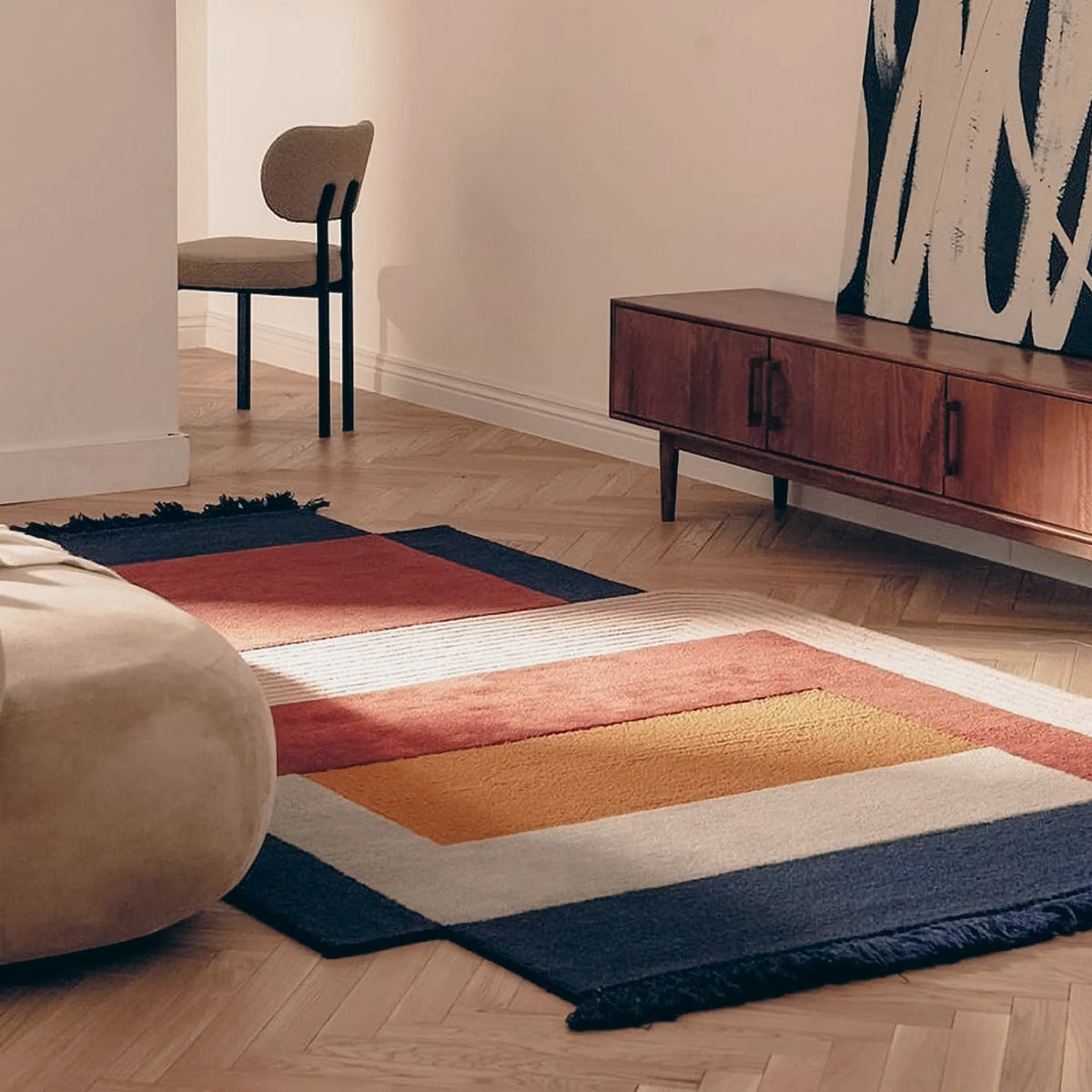
What usually works better is contrast that still leaves some breathing room. Stockholm Black and White Modern Offset Stripe gives definition and direction without that "pattern shouting at you" feeling at the end of a long day.
When black and white feels too crisp, navy and warmer neutrals land more gently and still keep that ordered look. Salina Navy Blue Grid Pattern Modern Rug keeps the structure but reads calmer in grey light, while warmer brown-and-cream checks like Amber Brown and Cream Checkered Textured Modern Rug give you that tidied-up feeling in a softer register than stark contrast.
The same calm-pattern logic runs through checks as well, just in a slightly different form. How to Use Checkered Rugs to Make a UK Room Feel Calm and Pulled Together sits neatly alongside this.


The house is tidy, but the room still looks visually busy
A room can be perfectly functional and still look like it never quite comes together. Coats are away, shoes are where they should be, the table is mostly clear, and yet the room still reads as one long stretch of competing things. The issue is not clutter so much as lack of separation, especially when the seating, dining, and walkway all sit in the same visual field.
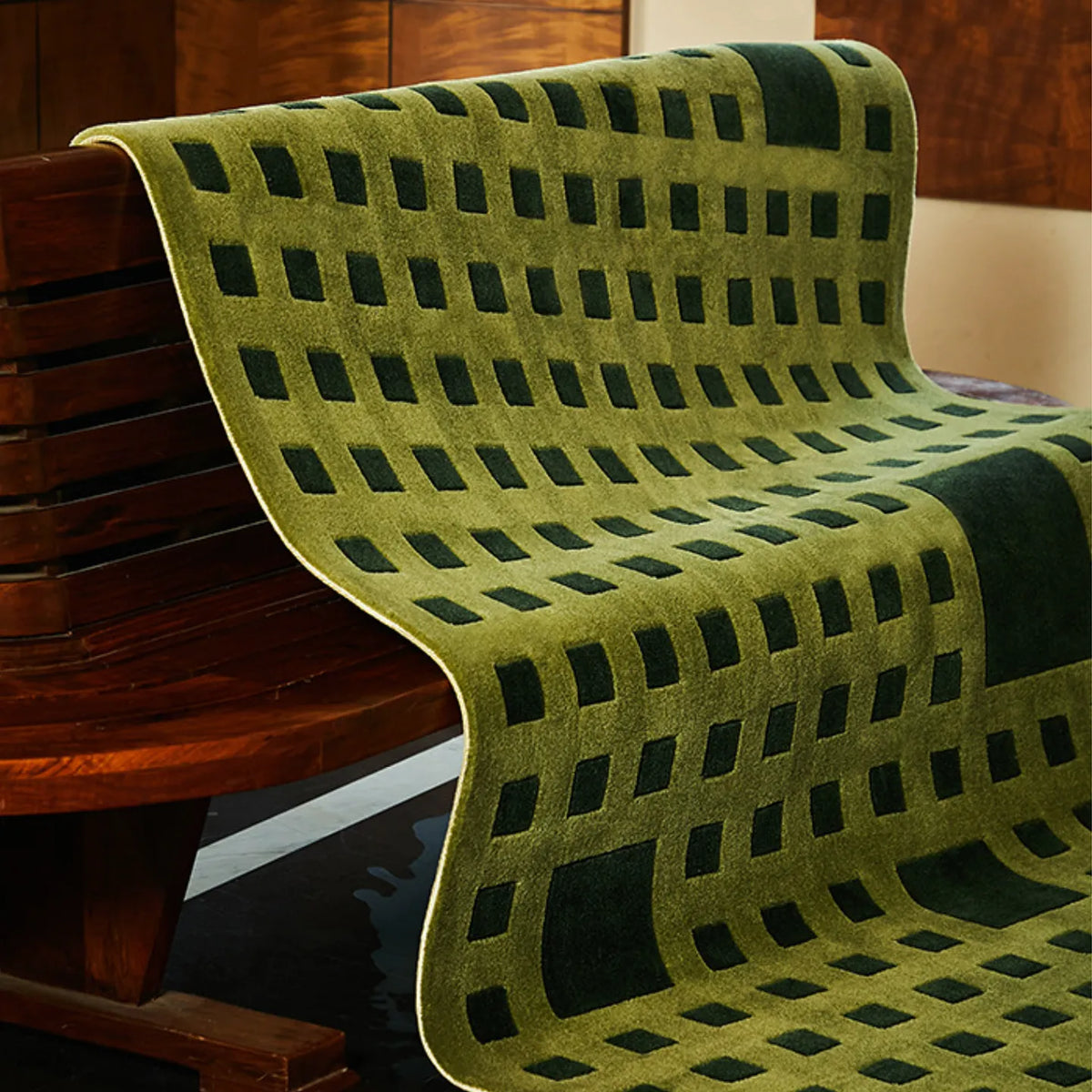
This is where a stripe or grid earns its keep by giving the room a clearer rhythm. You notice it most in rooms where one area keeps bleeding into the next, and a rug is enough to mark the shift while keeping the room visually whole. The best options here tend to be open rather than busy, noticeable enough to shape the room, but easy to live with over the course of the day.
You want order, not a room that feels boxed in
Geometric often gets reduced to one narrow look: perfect squares, sharp corners, tight repeats. That can work, but it is not the only way to make a room feel more composed. Some of the most useful ones borrow the logic of geometry but read less rigidly, so the room gains shape without becoming stiff.
That is where the more abstract end of the category becomes genuinely useful. Biscuit Brown Shaggy Abstract Geometric Rug still reads graphic, but the surface takes the edge off, so it feels warmer and less rigid in a lived-in space. Sometimes "geometric" is less about the exact motif and more about the effect, because the rug gives the room a stronger visual base even when the pattern itself is looser. Nova Black White Modern Irregular Wavy Shaped isn't a grid, but it still gives a simple room a stronger focal point on the floor, just with a softer outline.
Once you start noticing these differences, the category gets much easier to read. If you want to compare a few directions side by side, the Geometric Rugs collection is the simplest place to do it.


In a hallway, the wrong footprint is annoying within a day
Hallways don't give you time to "get used to" a rug. You notice the wrong choice immediately: the edge shifts, the pile feels annoying under shoes, the shape makes the space look accidental. What matters first is the shape and proportion. A long, narrow rug makes the hallway read as a proper route rather than a leftover strip between rooms.
For that corridor job, Ivo Cream & Mocha Grid High-Low Textured Rug and Elio Beige & Navy Striped High-Low Textured Rug are the cleanest examples. They are useful because they give the hallway more shape while keeping it easy to move through. A runner can also be the thing that brings personality into the hallway, but that only works when the rest of the space is quiet enough to take it. Eclipse Pink Orange Semi Circle Shaggy Runner Rug makes sense when the hallway is plain and you actually want it to have a bit of presence, not when you're trying to keep things quietly finished.


You've already covered the real-life placement logic for entrances in Tidy Home, Bleak Hallway? Rugs That Make UK Entrances Feel Finished, so that's the right link here, and there's no need to go through the whole thing again.
Fix one irritating spot, then leave the rest alone for a week
Geometric rugs work best when you ask them to solve one specific problem. Maybe the seating area never looks finished, maybe the hallway needs more direction, maybe one part of the room keeps dissolving into the next. Once you know the job, the right pattern is usually much easier to spot.
Start with the one spot that keeps bothering you, the part of the room that never looks quite right even when everything is put away. Fix that first, then leave the rest alone for a week. Most homes calm down once one area is properly defined, and after that it becomes easier to see whether anything else really needs changing.
For a longer, corridor-friendly footprint, start with our Runner Rugs collection.


0 comments