

Key Takeaways:
- In UK flats, small rugs work best as zoning tools, not mini versions of full-room rugs.
- Runner widths around 40–50 cm usually keep narrow routes cleaner than wider formats.
- Small formats work best at real touchpoints: bedside first step, sofa-side turn, and entry strips.
- Wavy or irregular outlines can soften rigid rooms better than strict rectangles.
- Use moss tones for calm visual weight, and floral blue as a lighter accent.
- If the goal is to anchor a full seating area, a small rug is usually the wrong scale.
Small flats rarely feel awkward because they are simply too small. More often, they feel unresolved because nothing clearly separates one function from another, so the sofa edge drifts into the walkway, the bedside area feels accidental, and even a tidy room can look slightly unsettled. A small rug fixes this faster than people expect because its real job is not coverage, but zoning. It gives one corner a purpose and helps the eye understand the room in seconds. If you are choosing from scratch, start with the Small Rugs Collection and decide by use first, then shape, then colour.


Why tighter layouts respond better to precise placement
In tighter layouts, placement matters more than size. A smaller rug that sits exactly where life happens will always look more intentional than a bigger one floating in the middle with no relationship to furniture or movement. Start with daily touchpoints: where you step out of bed, where you pivot by the sofa, where you pass through an entry strip. In many UK flats, 40 × 120 cm, 50 × 120 cm, 45 × 150 cm and 50 × 150 cm read as true runner proportions for narrow routes, while smaller formats are often better used as bedside or sofa-side accents than as central living room anchors. That is exactly why a piece like Elora Moss Green Round Mushroom Tufted Rug (60×60, 80×80, 100×100, 120×120 cm) works so well in small corners: it defines a zone without swallowing the floor.
In practical terms, think in clearance first. If a route is genuinely narrow, runner widths around 40–50 cm usually keep circulation comfortable, while 60 cm starts to feel visually heavy unless the surrounding floor is open. For anchor moments beside a bed or sofa end, small-to-mid accents like 50 × 80 cm or 60 × 120 cm often create a clear landing zone without pretending to be a full living room rug. The mistake is not choosing "small"; the mistake is choosing a size that fights the movement path.
A quick size-to-use guide makes this easier in real homes: 40 × 120 cm works well for a narrow entry strip, 50 × 120 cm suits a sofa-side pass-through, around 80 × 100 cm is strong for a bedside feature, and 100 × 120 cm is usually enough to anchor a small reading corner.


When a small wavy rug works better than a rectangle
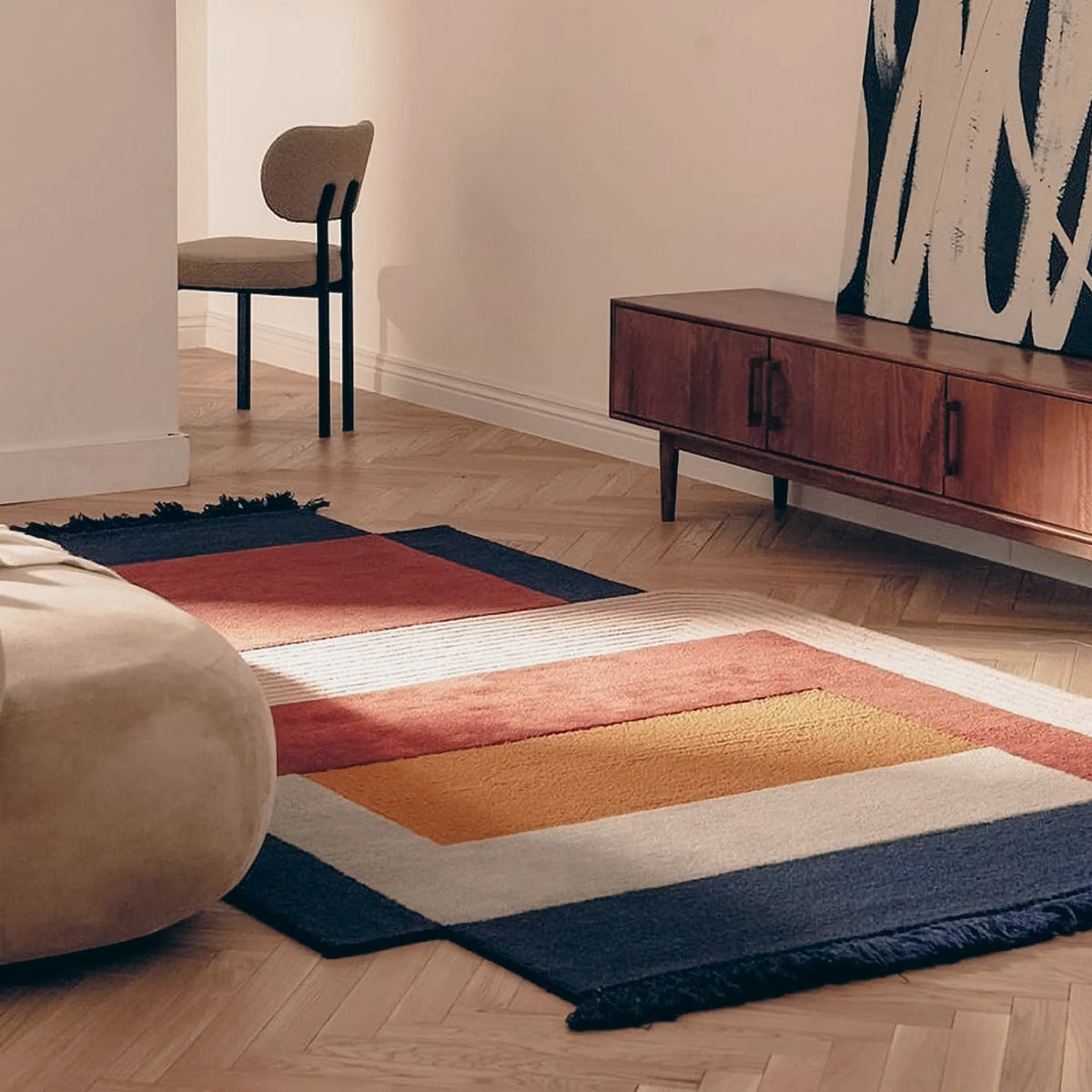
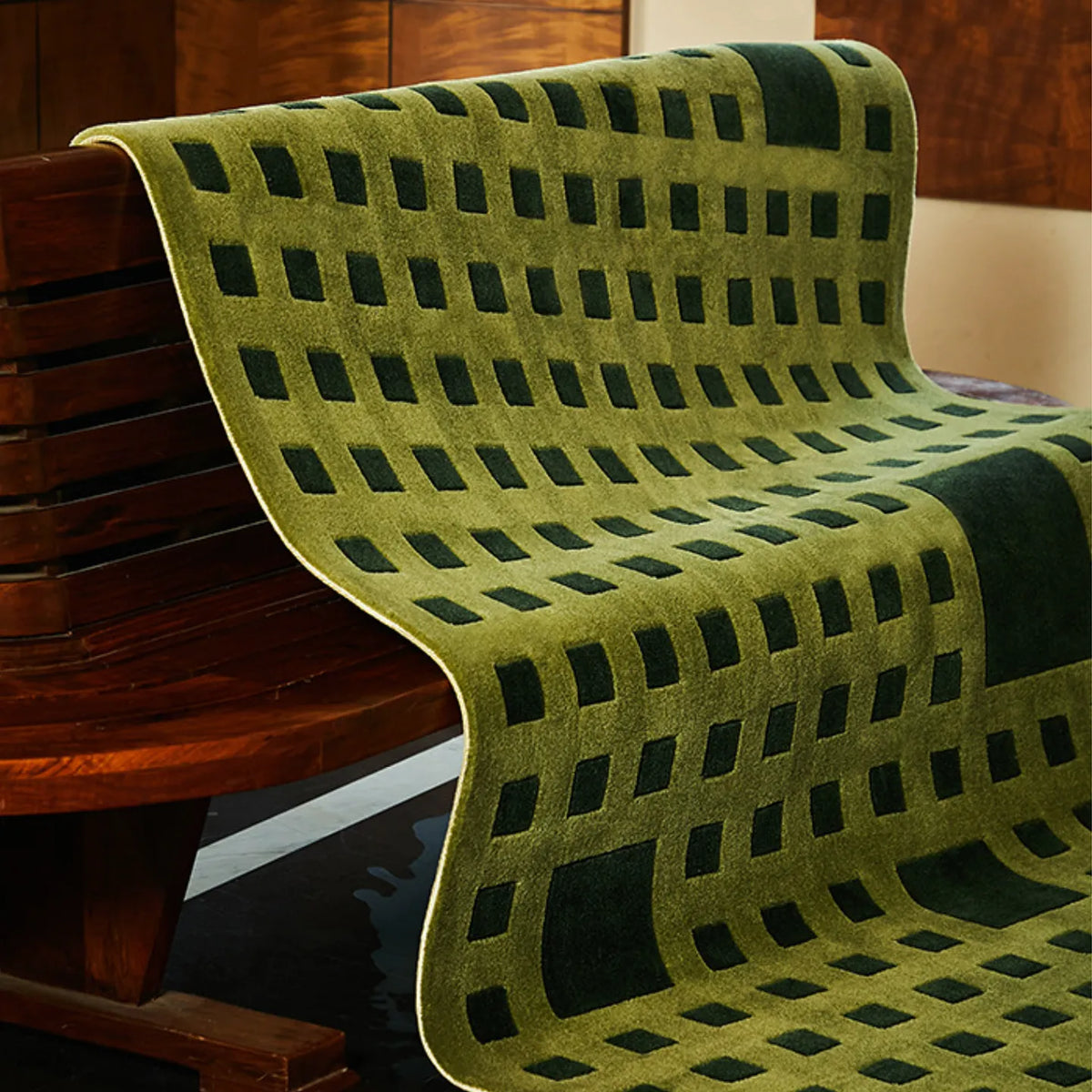
Rectangles are practical and often right, but they are not always flattering in homes already full of straight edges, boxy furniture and awkward corners. In those cases, a wavy or irregular outline can reduce visual stiffness and make imperfect architecture feel deliberate rather than compromised. You can see this clearly with a runner like Sylvie Moss Green Organic Camo Tufted High-Low Irregular Runner Rug (50×80, 50×120, 60×150 cm), which guides movement but still softens the corridor effect, or with Arlo White & Black Asymmetric Checkered Tufted Runner Rug, where the geometry feels intentional rather than rigid. If you want to follow that route, browse Wavy Rugs Collection, then continue with Why Wavy Rugs Feel Right in UK Homes (Even When the Room Isn't Perfect) and Wavy Rugs for Living Rooms: How to Choose the Right Size in UK Homes.


Where moss, daisy and floral blue fit in real homes
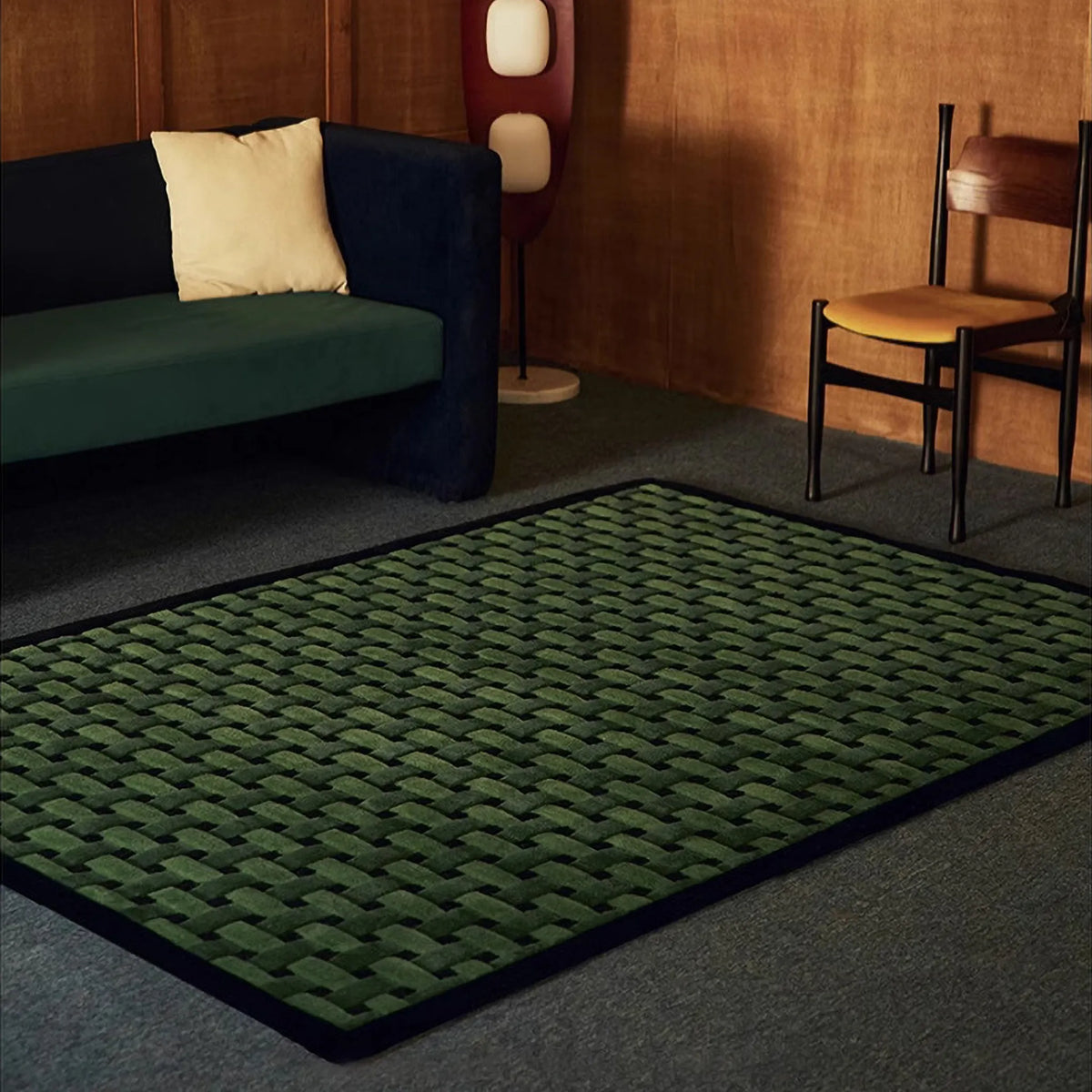
In a small flat, colour has to earn its place. Moss green is useful when the corner needs a bit more weight and calm, which is where Cassia Forest Green Monstera Leaf Irregular Tufted Rug (80×96, 100×120 cm) works well beside a bed, near a chair or in a reading spot.
A daisy shaped rug changes the mood faster. Maisie Green Daisy Flower Shaped Tufted Rug (80×80, 100×100 cm) gives a small patch of floor a clear shape, so it suits a bedside edge, nursery or reading corner where a plain rectangle might disappear. The green keeps it fresh, not childish.
Floral blue works better in brighter corners. Orla Blue & Green Floral Shaped High-Low Tufted Small Rug (80×120 cm) adds colour and movement without asking for much floor space, so it works when a small room needs lift more than weight. If you want to stay with flower shapes, Daisy Rugs keeps things focused. For round florals, blue floral pieces and abstract garden texture, Floral Rugs gives you more ways to keep the floral idea working in a small room.
In busy flats, textured tufted surfaces tend to age better visually than flatter low-contrast piles, especially around sofa-side turns and bedside first-step zones where compression marks show fastest.


How to avoid the over-styled look
The most common mistake in small homes is expecting one rug to do everything at once: anchor layout, deliver personality, carry colour and add texture. That usually creates pressure. A cleaner approach is to let the rug solve one clear problem first. If the issue is a hard, empty transition zone, a runner like Harper Blue and Black Irregular Polka Dots Tufted Runner Rug or Green Onion Playful Tufted Runner Rug can introduce rhythm without overwhelming the room. If you like small irregular silhouettes, Small Irregular Rugs: Cute, Soft & Giftable for UK Homes is still the most useful follow-on because it stays practical about placement and proportion.
A common miss in UK flats is using a small rug as a centrepiece under a coffee table that is already undersized for the seating area. The result is neither zoned nor relaxed, just visually adrift. In that layout, either commit to a true anchor size or treat the small rug as a side placement near a chair, bedside, or transition line.
Why green keeps outperforming in small formats
In small homes, colour has to add identity without increasing visual noise, and green continues to work because it is calm, adaptable and seasonally flexible. Moss tones do especially well in smaller footprints because they hold enough visual weight to define a zone and tend to be easier day to day than very pale bases. The trick is to keep the green doing a job, whether that means grounding a bedside corner, softening a chair-side spot, or giving a narrow room one steadier point to look at. If green is the direction you want to keep building on, Why Green Rugs Feel Calm, Not Cold in UK Homes is the better next read.
Where to start and what to avoid
A small rug is not a filler object. In a UK flat, it is a layout tool that happens to be decorative. Once it is placed where real movement and real use happen, the room reads as planned, not improvised, and everything else becomes easier to style around it. If you are making one decision first, make it placement; then refine shape and tone through the Small Rugs Collection. If you are choosing once and choosing properly, use this order: movement path first, rug footprint second, outline third, colour last.
It is also worth being clear about the boundary: if the goal is to anchor a full main seating zone, a small rug is the wrong tool and will make the room feel under-scaled however good the pattern is.
In practice, the most reliable order in small flats is still this: check movement clearance first, then lock footprint, then pick colour. Doing it in that sequence usually avoids the most expensive sizing mistakes.


0 comments