


There's a moment in every British year when our homes begin to feel… different. It's not when the heating first goes on, nor when we pull out the blankets. It's when the light changes. The clocks go back, daylight sinks lower, and suddenly the same living room you were perfectly happy with in August feels colder, somehow unfinished, and oddly more cluttered, even though nothing has moved.
What changed wasn't the house. It was how we see it.
In summer, light hits the room from above, washing surfaces flat and letting walls, floors and furniture blend into a soft, forgiving visual field. Winter flips that. Light comes in sideways, shadows sharpen, and corners feel harsher. The floor, especially if it's large, pale or empty, stops being a backdrop and starts becoming the most noticeable surface in the room. You notice the strange gap between the sofa and the wall, the coffee table looks like it's just floating, and the hallway suddenly feels narrower, busier and slightly overwhelmed.
You think your home has become more messy. It hasn't. It has just become more visible. In small British homes, rented flats, Victorian terraces, bay-window living rooms, the floor isn't just background. It quietly decides how finished, warm and connected a room feels, especially in winter light.
Why UK Homes Feel Colder and Messier in Low Light
British homes aren’t big, open-plan American spaces where furniture can breathe. They are semi-detached houses, Victorian terraces, rented flats and converted lofts. Rooms double up as offices, bedrooms, playrooms and living space all at once. In summer, you can ignore that overlap. In winter, overlap turns into visual noise.
People assume mess comes from objects, but in winter, mess often comes from emptiness. An empty floor makes every small thing suddenly louder. A lone toy, a charger, a pair of slippers might barely register on a bright July day, but in November they look like clutter.
That’s why, even in tidy homes feels busier in winter.
Why Plain Rugs Don’t Help, Even If They’re Beautiful
A plain rug is polite. It lets the rest of the room speak. In spring, that feels calm, and in summer, it can feel elegant. In winter, when light gets lower and shadows grow longer, it becomes too quiet. It lies flat, absorbs nothing and organises nothing.
In British living rooms, especially when the sofa feels slightly off-centre and the coffee table looks like it’s just ‘floating’, a plain rug doesn't anchor anything. It softens the floor, yes, but it never introduces one piece of furniture to another. We often think a rug’s job is simply to quieten a space. In small, multi-purpose British homes, the floor doesn’t just need softness. It needs direction.
Where does the living area start? What belongs together? What’s intentional and what’s accidental? A plain rug never answers those questions, so the room stays done, but not quite finished. That’s when people say, “I spent £200 on a rug and it still doesn’t feel right.” The rug didn't fail. It just didn’t take responsibility.
Chequered, Checkered, or Gingham Rugs?
In the UK, chequered is the most commonly used term for grid-style rugs, while checkered is more widely used in the US. Gingham usually refers to a softer, fabric-inspired check, often lighter and more playful in feel.
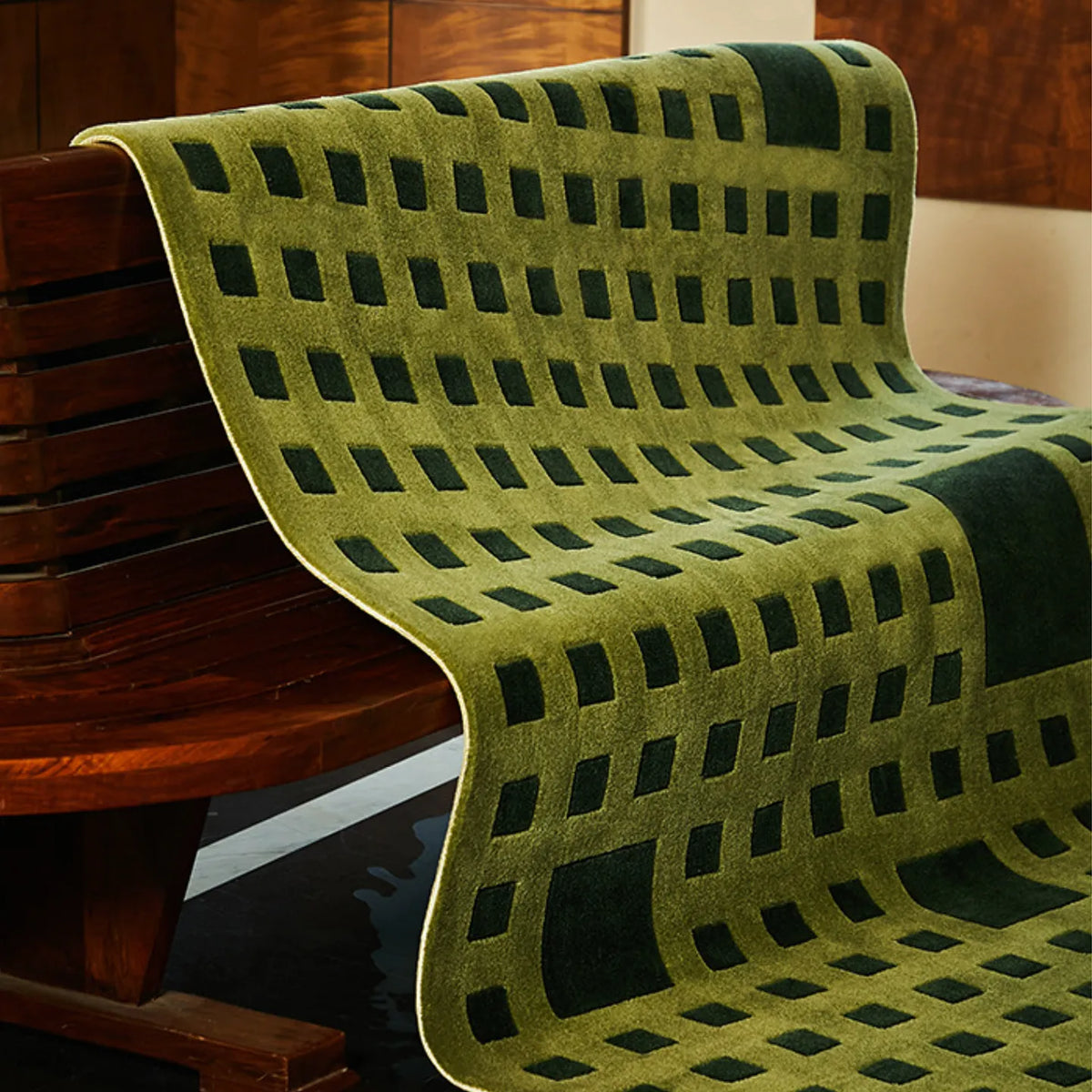
Despite the difference names, these rugs solve the same problem. They introduce structure to a space without relying on heavy colour or rigid edges. In rooms that feel slightly unsettled, pattern gives the floor something to do.
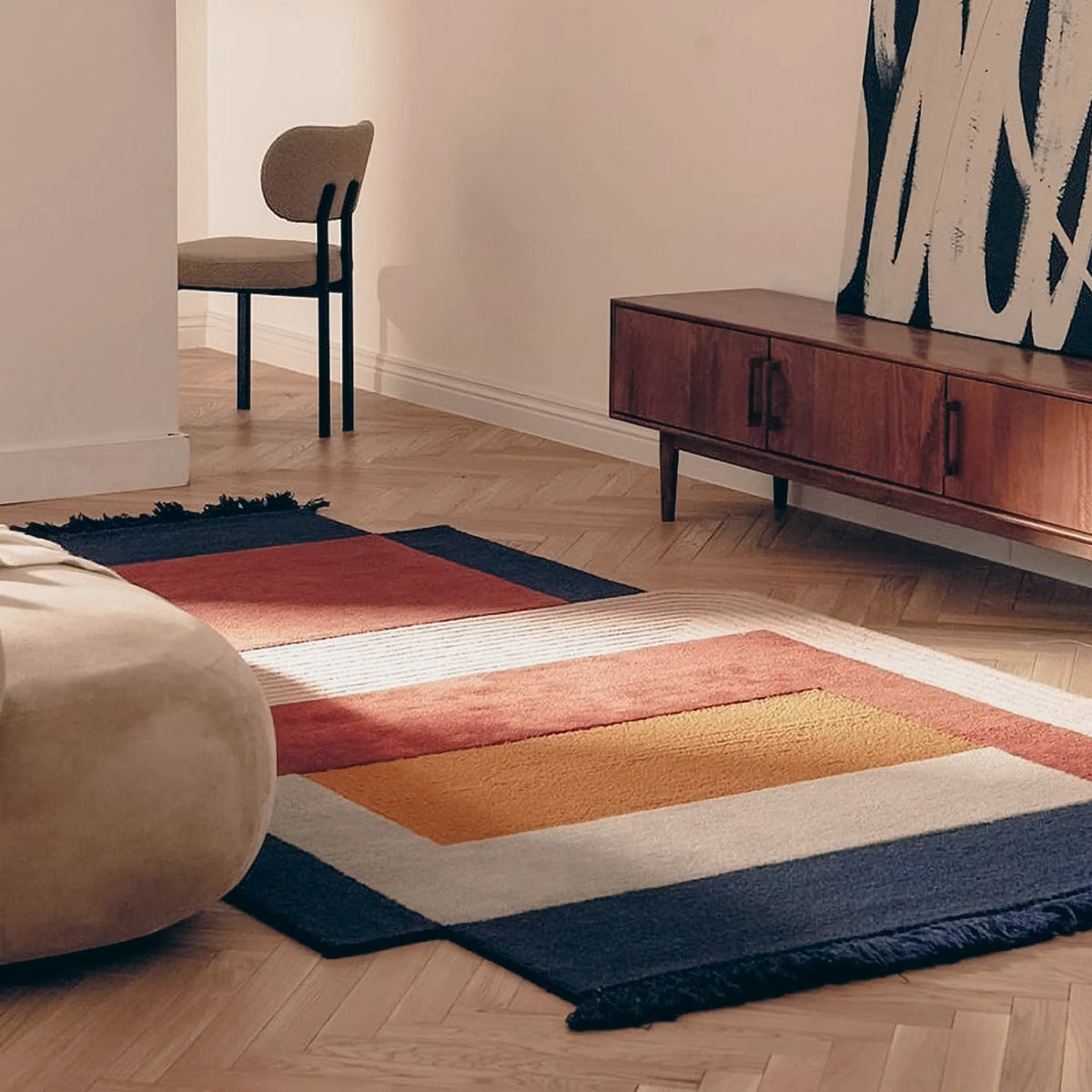
That's why designs like the Juno checkered styles or the Noor high-low grid rugs feel so at home in UK living rooms. The pattern quietly gives the space direction, even when the room itself isn't perfectly aligned.
Pattern Is Order, Not ‘Busy’
There’s a particular kind of mess that appears in November, the kind you can’t hoover away.
You walk into your living room at four in the afternoon, the light is low, the radiator is clicking, and everything feels visually unsettled. The ottoman looks like it drifted too far from the sofa, the plant by the TV seems sulky in the wrong corner, and even the charger on the floor feels oddly disrespectful.
That's when pattern matters. Not because it adds personality, but because it gives the room structure. A patterned rug doesn't announce itself as doing a job. It quietly gives instructions. This is where the living space begins. This is where the sofa belongs.
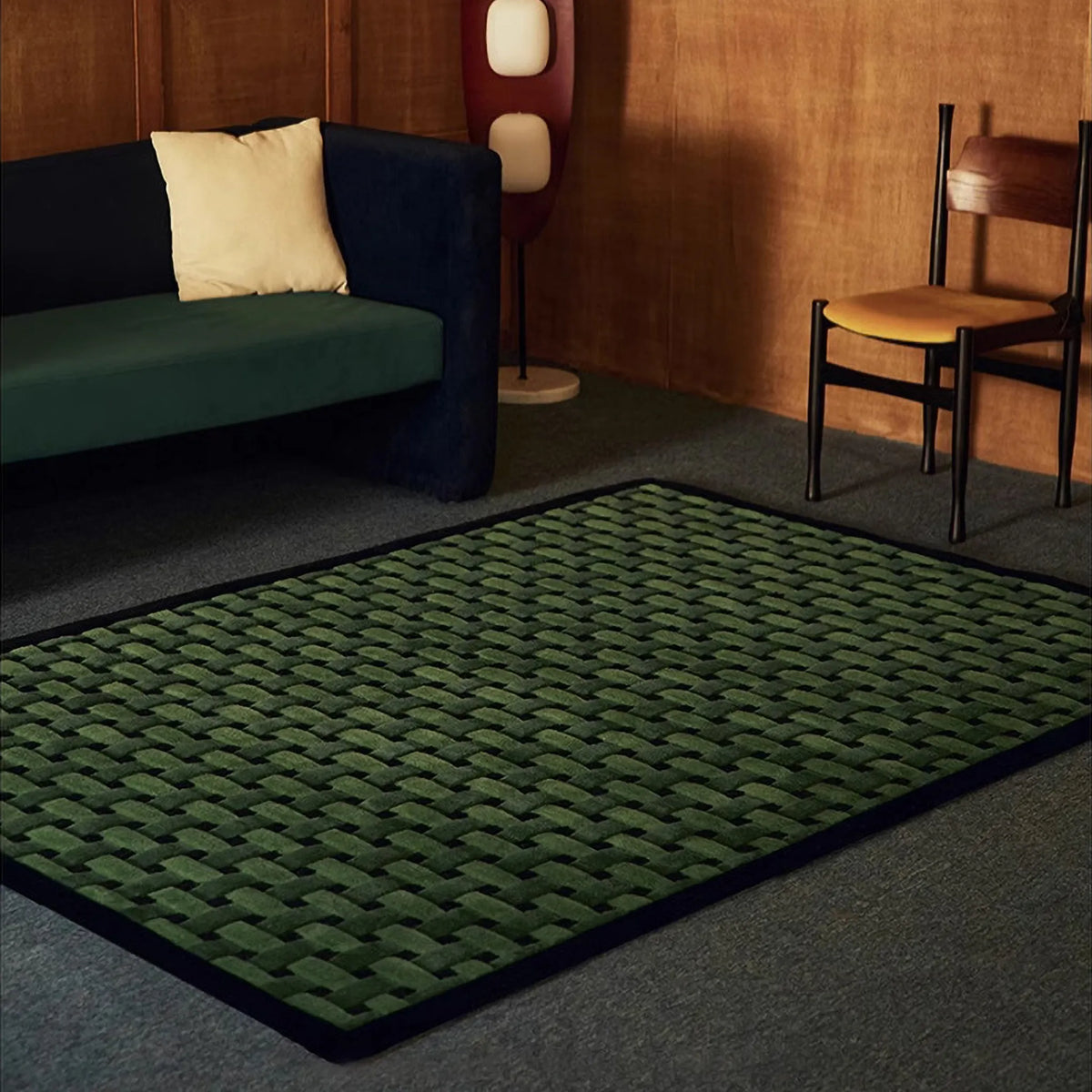
Think of a patterned rug like Juno Mustard Gold Navy Checkered Tufted Rug or Noor Brown Black Ivory Checkered Irregular High Low Rug. The grid quietly holds the sofa and coffee table together, so all the little bits on the floor stop feeling loud.


Pattern doesn't add clutter in British homes. It reduces uncertainty, and that's why geometric and checkered rugs feel so calming rather than busy.
Warmth Isn’t Just Colour, It’s Visual Density
Warm rooms in winter aren’t just the ones with candles and cinnamon throws. They’re usually the rooms that feel settled. The kind where the floor doesn’t echo when you walk across it in socks, and where the rug feels like it's hosting everything else rather than lying underneath it.
Some rooms don’t feel cosy because they’re warm. They feel warm because they finally feel lived in. Not decorative pattern, but reassuring pattern, the kind that repeats just enough for your eye to stop wandering.
Soft Geometry That Feels Human
In winter, light comes in low and sideways, tracing every edge of the room. That’s when corners feel sharper and furniture looks slightly off-angle. Soft geometry works so well because it absorbs that harshness. A scalloped border, a softened chequer or a curved outline doesn't just look gentle, it helps the eye rest.
Rugs like Cora Off White Irregular Wavy Shaped Rug, Nova Black White Modern Irregular Wavy Shaped Rug or Vera Pastel Green Orange Gingham Scalloped Rug soften the edges of a room without making it feel fussy. In magazines, straight-line geometry looks bold. In a real rented flat, something softer simply feels more at home.
That's why geometric and checkered rugs work so naturally in UK homes. They don't decorate the floor, they soften it into a place where things finally settle. Explore our Geometric Rug Collection and Checkered Rug Collection.


Do Patterned Rugs Really Make Rooms Feel Tidier?
One of the most satisfying winter moments is realising your room looks calmer even though nothing has been tidied. Pattern doesn’t hide objects. It gives them a visual context, so they stop looking like clutter and start looking like they belong. Pattern doesn't tidy the room, it gives everything somewhere to exist.
That’s the difference.
Pattern + Texture vs Printed Flat Rugs
Printed rugs can look patterned, but they don’t behave like pattern. On hard flooring they sit like a picture, reflecting light, showing every crumb and offering no shadow no density.
By contrast, a textured geometric or checkered rug bends light, absorbs echo, defines space and so the floor feels involved. It doesn't just show warmth, it conducts it. Pieces like Bambusa Green Woven Grid High Low Tufted Wool Rug, Amber Brown and Cream Checkered High Low Rug or Cream Diamond Modern High Low Hand Tufted Rug have that sculpted surface that catches light, softens footsteps and quietly thickens the room's atmosphere.
That's why textured rugs feel so different in winter. They don't just sit in the room, they help the room feel held. See our Textured Rug Collection or read: Best Textured Rugs for Winter — High-Low, Sculpted, Plush for UK Homes.


Do You Need a Patterned Rug This Winter?
If your room feels finished but not connected, the question isn't whether pattern makes it look bigger or smaller. It’s whether the floor is doing enough work. In rented flats, bay-window living rooms and semi-detached home, a rug isn’t decoration. It is visual infrastructure.
One day the sofa stop looking like it drifted there. The lamp doesn't feel temporary anymore. The floor finally feels part of the room. Some rugs don't just fill space. They give it a beginning.
A large sculpted piece like the Reynisfjara Black Shore White Waves Abstract Rug grounds a room almost like you've drawn its first line. Smaller anchored pieces, like the Elora Moss Green Round Mushroom Tufted Rug, quietly turn space floor into a place you actually want to be.
Explore the Irregular Rug Collection — designed for real homes that aren't perfectly symmetrical, but perfectly lived in.


A room can be tidy and still not feel calm because it isn't visually connected. Winter doesn't expose clutter. It exposes empty space that isn't pulling its weight.
A Quiet Shift, Not a Makeover
When people ask whether a patterned rug will make a living room feel calmer or busier, the answer isn't really about decoration. Walls don't define the room. Furniture doesn't anchor the room. The floor does, but only when it's given something to work with.


0 comments