

Key Takeaways
- Green rugs feel calming in UK homes because they absorb light rather than reflect it, which helps rooms feel quieter and more settled in winter.
- Calm does not mean pale. Light, moss and deep greens behave differently depending on depth, texture and available daylight.
- Green rugs rarely feel cold because warmth comes from surface, density and texture, not colour alone.
- Textured green rugs add both visual and physical warmth by softening sound, trapping air and breaking up hard floors.
- Patterned green rugs often feel calmer than plain ones because structure helps anchor furniture and reduce visual drift.
- In British homes, green rugs act as visual infrastructure, grounding spaces and making rooms feel finished rather than decorated.
There is a quiet reason green rugs keep appearing in British homes, especially as the light drops and winter settles in. They are often described as calming, but rarely explained properly. In the UK, green does something more specific. It absorbs, steadies and softens a space in a way that pale neutrals often fail to do once the light changes.
This is not about trend cycles or seasonal colour palettes. It is about how green behaves in real British homes, with grey skies, wooden floors and rooms that need to work harder than they look.
Why Green Feels Different in UK Homes (It’s Not Just the Colour)
British light is rarely direct. For much of the year it is low, diffused and slightly grey, especially in winter. In these conditions, colour behaves differently. Pale tones can feel exposed. Cool whites and greys often reflect light unevenly, making rooms feel flatter or colder than intended.
Green rugs work because they act as a visual buffer. Rather than bouncing light back into the room, green absorbs it gently. This makes the floor feel quieter and more settled, which is why green rugs often register as calm rather than decorative.
In UK homes, calm does not mean empty or minimal. It means the eye has somewhere to rest. A well-chosen green rug gives a room that resting point, especially in living spaces that feel slightly unfinished in winter light.
If you look across our green rugs, you will see this balance repeated. The colour supports the room without asking for attention. A well-chosen green rug gives a room that resting point, especially in living spaces that feel slightly unfinished in winter light.
Calm Doesn’t Mean Pale: How Different Greens Behave in Real Light
Green is not a single mood. Its calming effect depends heavily on depth and tone.
Light green rugs tend to feel airy and open. They work well in smaller rooms or spaces that need a lift, especially when daylight is limited but still present. These shades feel fresh rather than cool, particularly when paired with softer textures.
Moss and olive greens behave differently. They feel grounded and cocooning, ideal for rooms where you want to reduce visual noise. In winter light, these tones absorb shadow rather than amplifying it, which helps rooms feel more contained and intentional.
Deeper greens feel stable and grown-up. They carry weight without heaviness and often suit living rooms where the floor needs to anchor furniture rather than fade into the background.
This difference in behaviour is why choosing between light, moss or deep green matters more than simply choosing “green”. If you want a room-by-room breakdown, Green Rugs in UK Homes: Choosing the Right Shade for Every Room explores this in more detail, with practical examples.
Why Green Rugs Don’t Feel Cold in Winter (Even on Wooden Floors)
Cold floors are rarely about colour. They are about emptiness, reflection and surface.
In winter, wooden floors reflect light unevenly. Pale rugs can exaggerate this, making rooms feel sparse or exposed. Green rugs work differently. They absorb light rather than reflecting it, which immediately reduces that cold, echoing feeling.
Texture plays a crucial role here. Green rugs with sculpted surfaces, high–low tufting or carved piles trap air and soften sound. This creates warmth not just visually, but physically underfoot.
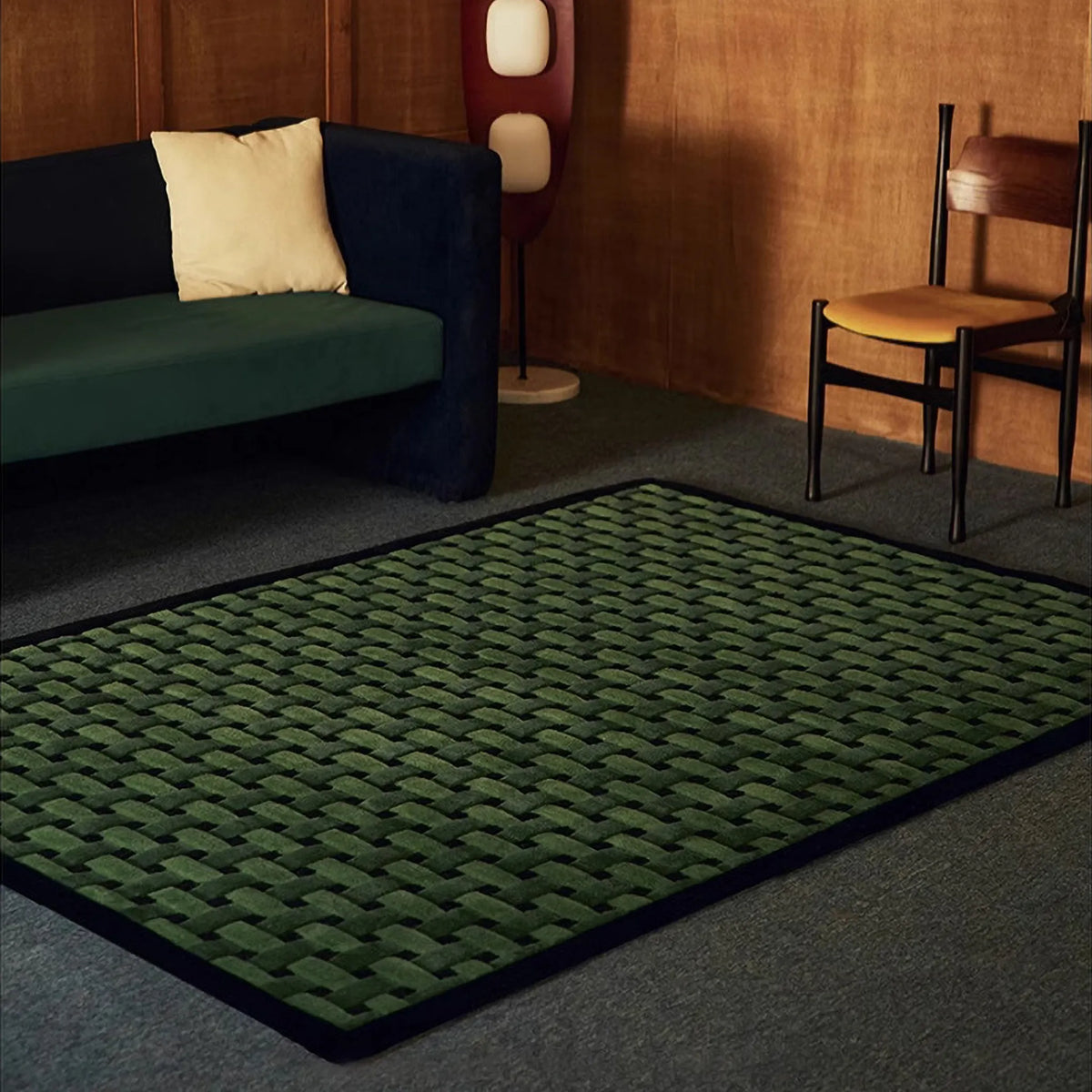
Rugs such as Bambusa Green Woven Grid, Verdure Deep Green Moss-Inspired, Coquille Green Cream Irregular, Milo Green Small Oval Shaggy, and Biscuit Green Shaggy Abstract all rely on texture to reinforce warmth. Their depth breaks up hard surfaces and helps wooden floors feel more comfortable during colder months.
For a broader look at how floor coverage affects warmth, Why Large Rugs Make UK Homes Feel Warmer in Winter explains the role of scale and surface in more detail. You can also explore our textured green rugs to see how pile height and carving change the feel of a room.
Patterned Green Rugs vs Plain Green Rugs: Which Feels Calmer?
Plain green rugs are calming, but they can sometimes feel like they are floating, especially in open or awkwardly shaped rooms. Patterned green rugs add a second layer of stability. Curved outlines can enhance this calming effect even further. Our guide to wavy rugs explains why softer edges often feel more settled in UK homes.
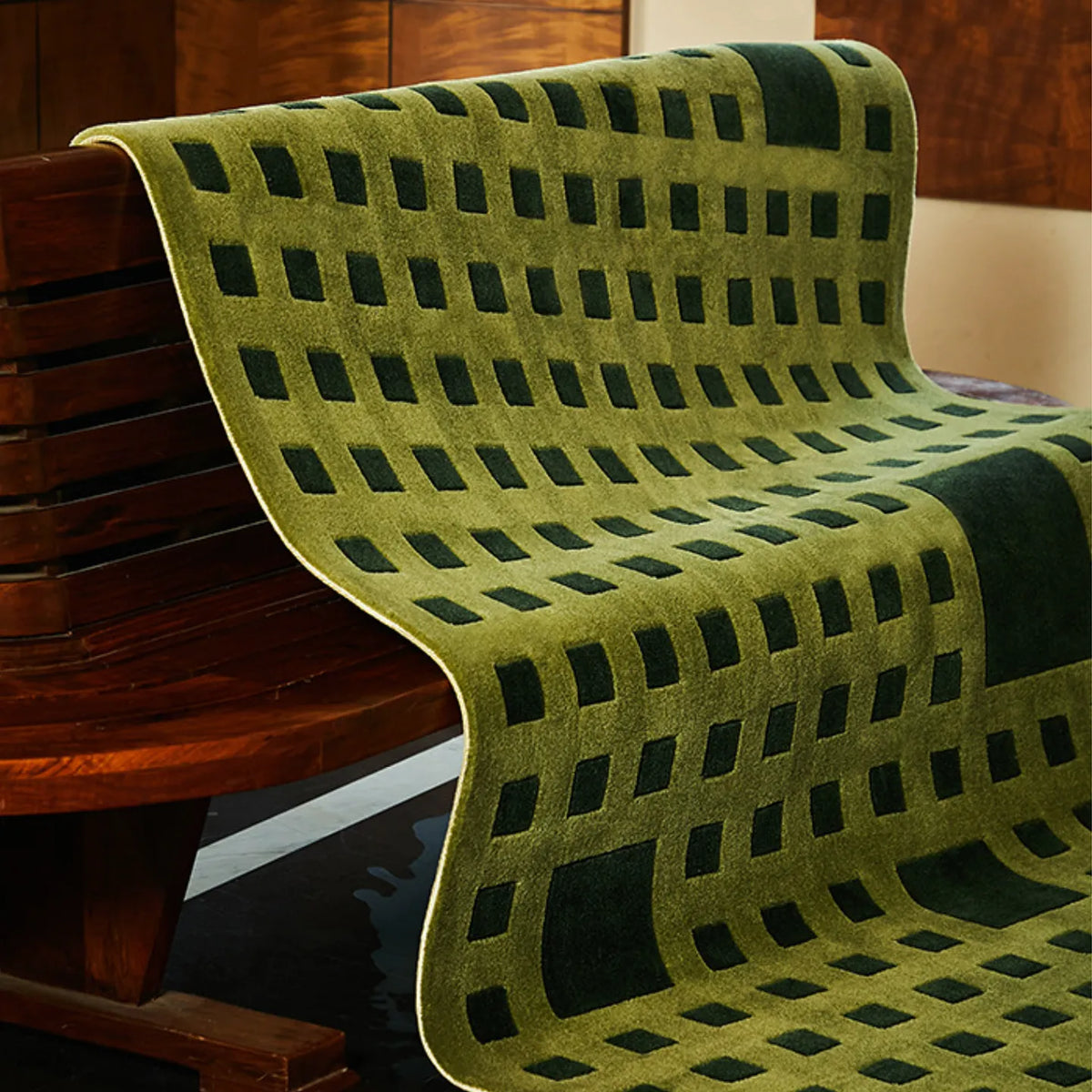
When pattern is combined with green, the effect is structured without feeling busy. Grids, checks and soft geometry give the floor direction, which helps furniture feel anchored rather than loosely arranged.
Rugs like Noor Green Black Mint Checkered, Tessera Moss Green Grid, Olive Green Check High Low, and Arden Green and Black Polka Dots balance calm colour with quiet order. The pattern does not compete with the room. It simply helps everything sit where it belongs.
If you are deciding between plain and patterned options, our geometric rug and checkered rug collections show how structure can enhance calm rather than disrupt it. For a deeper explanation, Why Geometric and Checkered Rugs Make UK Homes Feel Warmer breaks down why pattern often reduces visual clutter in British interiors.
Where Green Rugs Work Best in UK Homes
Green rugs are particularly effective in living rooms, where they ground seating areas and soften the space between furniture. In winter, they help rooms feel finished rather than sparse.
In bedrooms, green encourages rest without feeling dull. It works well beside beds or under dressing areas, especially when paired with soft textures that reduce morning chill.
Small flats benefit from green rugs because a single, consistent colour reduces visual fragmentation. Rather than breaking the floor into zones, green allows the space to read as one calm surface.
Runners also play a role here. A piece like the Green Onion Runner brings colour and direction to hallways without overwhelming them. For more placement ideas, How to Style Green Rugs for Calm and Character at Home explores how green behaves across different rooms. If scale is a concern, our small green rugs collection offers flexible options for compact spaces.
Green Rugs as Visual Infrastructure, Not Decoration
Green rugs work because they do a job. They steady light, absorb noise and help rooms feel settled rather than styled.
In British homes, especially during winter, decoration alone rarely solves the problem. Floors need structure and density. Green provides that without asking for attention.
If you are choosing between shades or patterns, our Green Rugs Collection brings these ideas together in one place. And if you want a deeper breakdown, our green rugs guides explore each option room by room, helping you decide what will actually work in your space.


0 comments