

Key Takeaways
- Cottagecore rugs can suggest a garden, woodland floor or rural craft. Floral designs are only one route.
- Patterned rooms may benefit more from texture, while plainer spaces can carry a recognisable natural subject.
- Moss and mushroom rugs create small landscapes; flower-shaped rugs become clearer individual features.
- Braiding, jute and rural patterns offer quieter alternatives to decorative florals.
- Light greens feel fresher, while deeper tones and uneven pile suggest shaded woodland.
- Choose an area rug, runner or small accent around the available floor. Cottagecore can work beside modern furniture.
A rug covered in a formal flower repeat, a green daisy and a moss-like tufted surface can all fall under the cottagecore label, yet each brings something different into a home. Put them beside a modern sofa and plain walls, and choosing one can suddenly feel less straightforward. A full country scheme may feel like too much, especially when the rest of the home is simple. The floor offers an easier place to begin, whether through one recognisable garden subject, a softer patch underfoot or some evidence of familiar household craft.
The Cottagecore Rugs Collection brings several of those routes together. Its flowers are shaped as well as patterned, and moss appears through clustered colour and raised pile. Mushrooms, braided surfaces and fringed jute broaden the idea beyond a conventional floral carpet.
At Housenfriends, cottagecore is not shorthand for every green or botanical rug. We use it for designs that bring nature, rural memory or useful craft closer to everyday life. Some look as if a piece of garden or woodland has reached the floor. Others carry the atmosphere more quietly through fibre, colour and construction.

What Does Cottagecore Mean in a Rug?
A cottage interior rarely depends on one perfect motif. Wood grain, linen, baskets, old ceramics, plants and collected furniture build the atmosphere gradually. Much of the character comes from small variations: surfaces that do not match exactly and objects that look as though they were gathered over time.
Rugs join that setting in several ways. Flowers, mushrooms, fruit and leaves provide an immediate rural reference. A petal-shaped edge or an organic patch draws the surrounding floor into the image, while tufting, braiding and fringe introduce the visible marks of texture and making. Moss green, brown, cream and softened garden colours suggest different landscapes.
Few designs use all those qualities at once. Some woven rugs carry no recognisable subject; a flower-shaped rug can still have a surprisingly simple graphic surface. Moss-inspired pieces often depend more on colour and pile than on an illustrated plant.
Cottagecore also reaches beyond one imagined English garden. Braided rugs, colourful rag-rug surfaces and patterns associated with rural homes carry their character through everyday craft and memory. They recall making, keeping and living close to nature, but are not tied to one historical formula.
Pale petals and rounded edges bring a light garden quality, whereas deep green texture suggests shaded woodland. Brown, beige and visible weave introduce a more rustic note. With cleaner outlines, the same natural references can sit comfortably beside contemporary furniture.
Where to Start: Should the Rug Show Nature or Suggest It?
Start with what is already visible. Among several plants, a wooden table and botanical cushions, another detailed leaf pattern can add very little. A softer surface or the loose irregularity of something braided or moss-like often brings more to that setting.
A plainer space offers a different opportunity. Against quiet walls, a simple sofa and an open patch of floor, a flower or mushroom gives the eye somewhere to settle. One recognisable subject can establish the natural reference, so there is less pressure to explain the style through several smaller decorative objects.
From standing height, the outline of a flower is often understood before anyone notices its surface. An organic patch takes longer to read, yet it still breaks up the rectangles made by sofas, cabinets and floorboards. Braided bands, visible fibre and changes in pile reveal themselves more gradually, often becoming clearer only as someone approaches the rug. Shape brings nature onto the floor quickly; texture lets the reference sit more quietly beside artwork, patterned upholstery or collected objects. Our How Floral, Leaf and Moss-Inspired Rugs Add Shape and Life to a Room guide looks more closely at how both behave around furniture and open floor.
A Moss Rug and a Flower-Shaped Rug Do Different Work
The Elora Moss Green Round Mushroom Tufted Rug looks less like a conventionally decorated rug than a small piece of inhabited ground. Tiny mushrooms sit across the green surface, and the rounded irregular edge keeps the composition away from a formal repeat. The eye sees a place before it begins to study each motif, with the scattered details suggesting a damp, lively patch of woodland where each one appeared independently. That small scene places Elora firmly within cottagecore, with an earthier quality that also touches on mosscore and goblincore.
With the Merryn Green Moss Garden High Low Tufted Rug, the idea moves further away from illustration. Clustered greens and raised tufting build depth through the ground itself. From across the room, it first registers as an organic green patch; the shifts in pile become clearer near a chair or at the edge of a bed.
A flower-shaped rug establishes itself faster. The outline of the Maisie Green Daisy Flower Shaped Tufted Rug is understood before its two greens are studied closely, making it a distinct object on the floor rather than an expanse of terrain. Its daisy shape feels confident and almost graphic, yet the garden connection remains immediate. Given enough space around it, the rug can sit beside simple modern furniture with no need for vintage pattern elsewhere.
In a busier interior, Merryn’s quieter texture has space to settle among the objects already there. Maisie gives a plainer corner one clear flower to focus on, whereas Elora suits someone who wants the floor to suggest a miniature woodland scene. The difference is less about which rug looks most cottagecore and more about how clearly the rug should announce itself.
Pile height, clustered colour and irregular edges are explored further in What Makes a Moss Rug Look Like Moss? Texture, Shape and Layered Green. For the more graphic route, Why Daisy Rugs Feel More Versatile Than You Might Expect follows the flower shape through different colours and surroundings.
Cottagecore Rugs Do Not Have to Be Floral
Some people enjoy the warmth of cottage style but have little interest in floral rugs. Others already have flowers on curtains, cushions, artwork or upholstery, leaving little reason to repeat the same subject at floor level. Weave, fringe and braided construction can bring in a quieter kind of cottage character.
Visible craft comes through clearly in the Maren Natural & Olive Fringed Handwoven Jute-Blend Rug. Natural colour, a practical rectangular form and fringe that remains visibly part of its construction allow it to recall a useful household textile before it resembles a themed decoration. Beside the woven surface, timber appears warmer and plants provide the living green. Patterned cushions and ceramics can remain distinct too, since the floor is not introducing another floral motif.
The Elina Brown & Beige Wool-Blend Braided Half Moon Rug follows another non-floral route. Concentric bands, a rounded form and warm neutral tones bring craft and structure to the floor. There is no flower or mushroom to interpret, yet the rug sits naturally with wood, baskets, linen and other familiar cottage materials.
Stripes, checks and rag-rug colour open the category further. Their character comes from household textiles and making traditions. A restrained palette leans rustic and settled; brighter colour recalls the liveliness of a summer cottage or a home assembled slowly over time.
Colour Changes Which Version of Cottagecore You See
Green is an obvious starting point, but it does not produce one fixed mood. Clear mid-green looks fresh and open on a simple flower such as Maisie. Gather several deeper greens across an uneven pile and the same colour family moves towards shaded growth, damp ground and woodland cover.
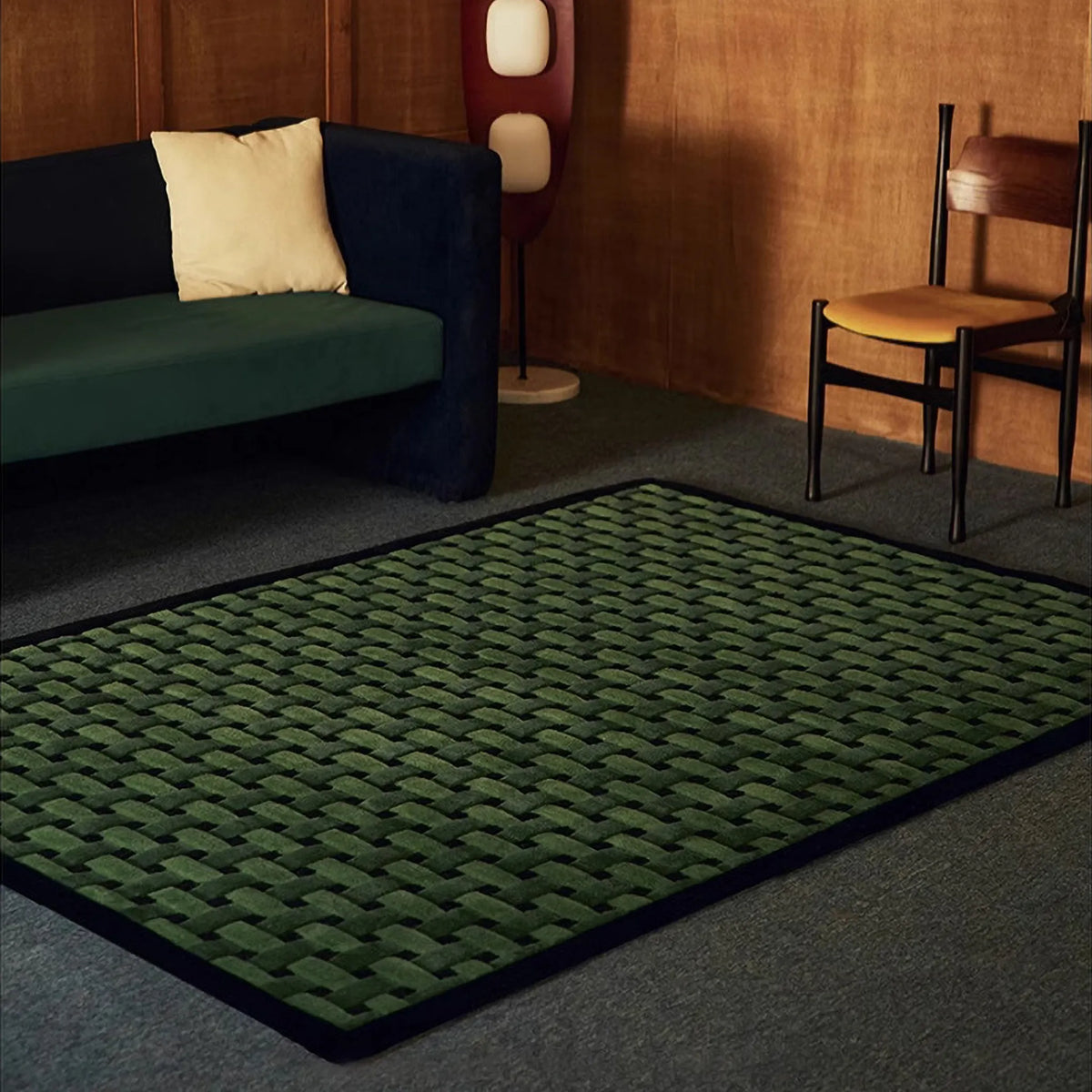
At the darker end sits the Marlow Deep Green Mossbank High Low Tufted Rug. Its clustered form and concentrated greens suggest a dense bank seen at close range. Pale wood, cream upholstery or a patch of visible floor gives those tones enough contrast to show their depth.
Olive brings more earth and dryness, sitting easily beside aged wood, natural fibre and muted red or brown. Light sage has a softer domestic character and places less visual weight near the floor.
Blue changes the imagined landscape again. The Orla Blue & Green Floral Shaped High-Low Tufted Rug keeps the botanical subject but moves away from the familiar cream, pink and sage cottage palette. Blue gives the flower a cooler, more graphic character, while green keeps the connection to plant life intact.
The Housenfriends version of cottagecore extends beyond the colours of an antique floral carpet. Brown, beige and ivory recall soil, undyed fibre, dried stems and basketry, while pink and cream lean towards more romantic cottage interiors. Dark green, brown and blackened blue bring woodland shade to spaces where pale florals would look too sweet. Across these palettes, shape, surface and a strong natural reference keep the cottagecore connection intact.
A single nearby colour connection is usually enough. Green can answer a plant, painted cabinet or cushion. Brown sits comfortably near timber even when the tones differ. Blue can pick up a small detail in artwork or upholstery, and the rug still keeps its own identity.
Does the Room Need a Cottagecore Area Rug, Runner or Small Accent?
Style comes after the rug’s practical job on the floor. A beautiful mushroom runner becomes awkward when its length cuts across the main walking route. A flower-shaped accent loses much of its character when most of the petals disappear beneath a large coffee table.
Across a larger area rug, cottagecore colour and texture have more influence over the space. The rug may connect the sofa, chairs and coffee table in a living room, or extend beyond the bed to provide a useful landing surface. In either position, enough of the design must remain visible for its flowers, woodland colour or crafted surface to register.
Along a hallway or beside a bed, the long format of the Marnie Grey Quirky Mushroom Motif Tufted Rug gives the eye a clear direction to follow. Its sequence of small mushrooms makes more sense on a narrow route than in a central position surrounded by several pieces of furniture. They should remain easy to read from the usual approach, with enough clearance for doors and chair legs, because Marnie needs to succeed first as a runner and then as a piece of woodland imagery.
Beside a bed, at the open end of a sofa or near a reading chair, a small shaped accent can soften one limited patch of floor. These placements also leave most of its edge visible, which matters when the flower, leaf or organic silhouette is the reason for choosing the rug.
Measure the useful floor before settling on a format. Full room dimensions tell only part of the story; door swings, furniture legs and everyday walking routes reveal what the open patch can actually hold. Once those practical limits are clear, moss, mushrooms, flowers or braided texture give that piece of floor its particular character.
Can a Cottagecore Rug Work in a Modern Room?
Place a shaped flower beside a plain sofa and its outline becomes easier to notice. Straight cabinet edges bring an organic moss form into sharper focus, and smooth upholstery sets off the depth of tufting or braiding. Modern furniture provides contrast instead of working against the rug.
Once a daisy, mushroom patch or mossy surface is on the floor, the room may already have all the cottagecore character it needs. Repeating the same subject across cushions, wallpaper and accessories can quickly turn a natural reference into a theme. Wood, linen, baskets, plants and handmade ceramics offer enough familiarity without copying the rug exactly.
In a home shared by people with different tastes, that looser connection leaves more room for compromise. Someone who dislikes decorative florals may still enjoy woven texture, mossy green or a simplified shape, while the larger furniture stays modern and uncluttered.
Explore the Cottagecore Rugs Collection by starting with the atmosphere you want underfoot, then choosing the proportions that suit the available floor. A clear natural subject brings immediate character; mossy texture or visible craft takes a quieter route. The right rug draws one piece of the countryside into everyday life while the rest of the interior remains entirely your own.


0 comments