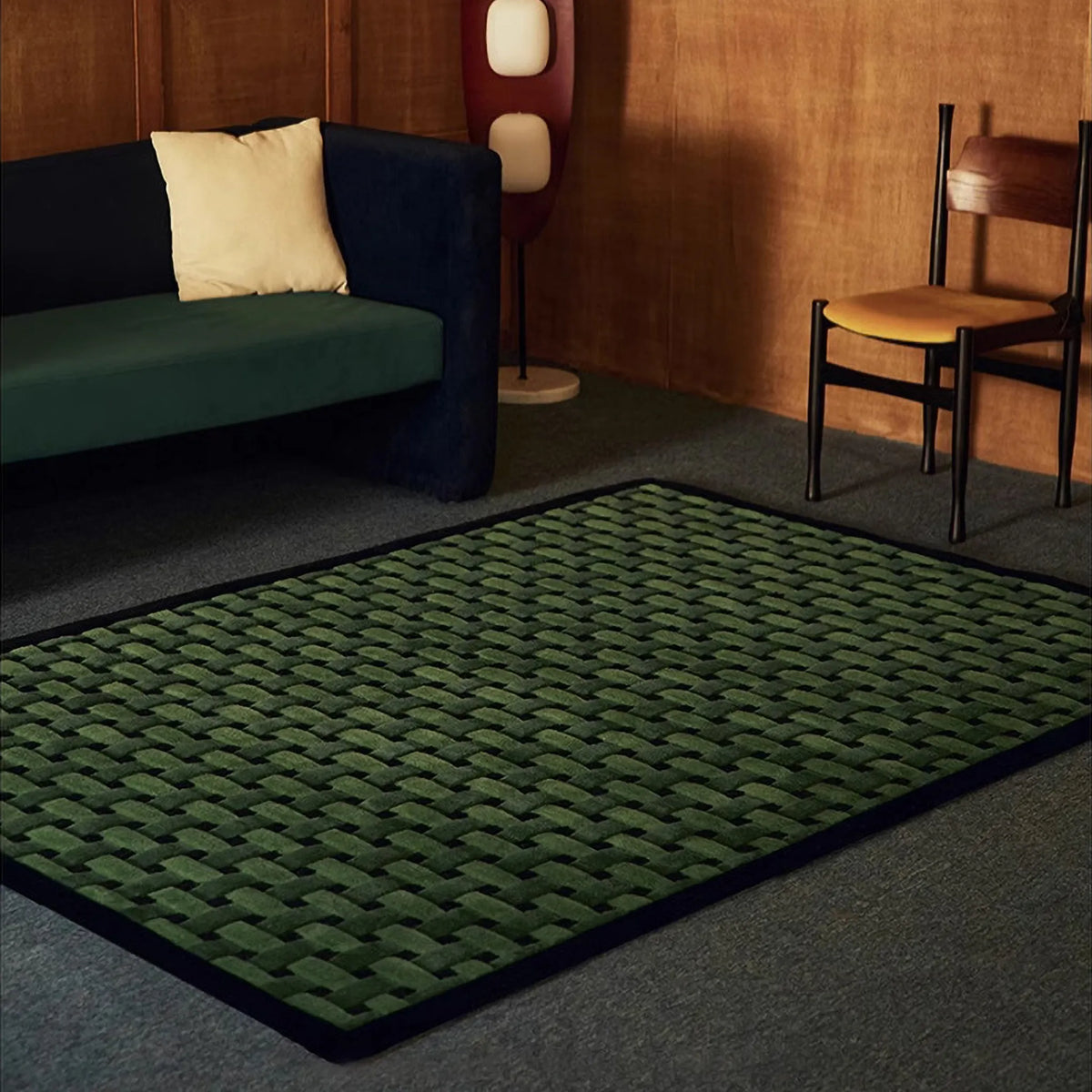
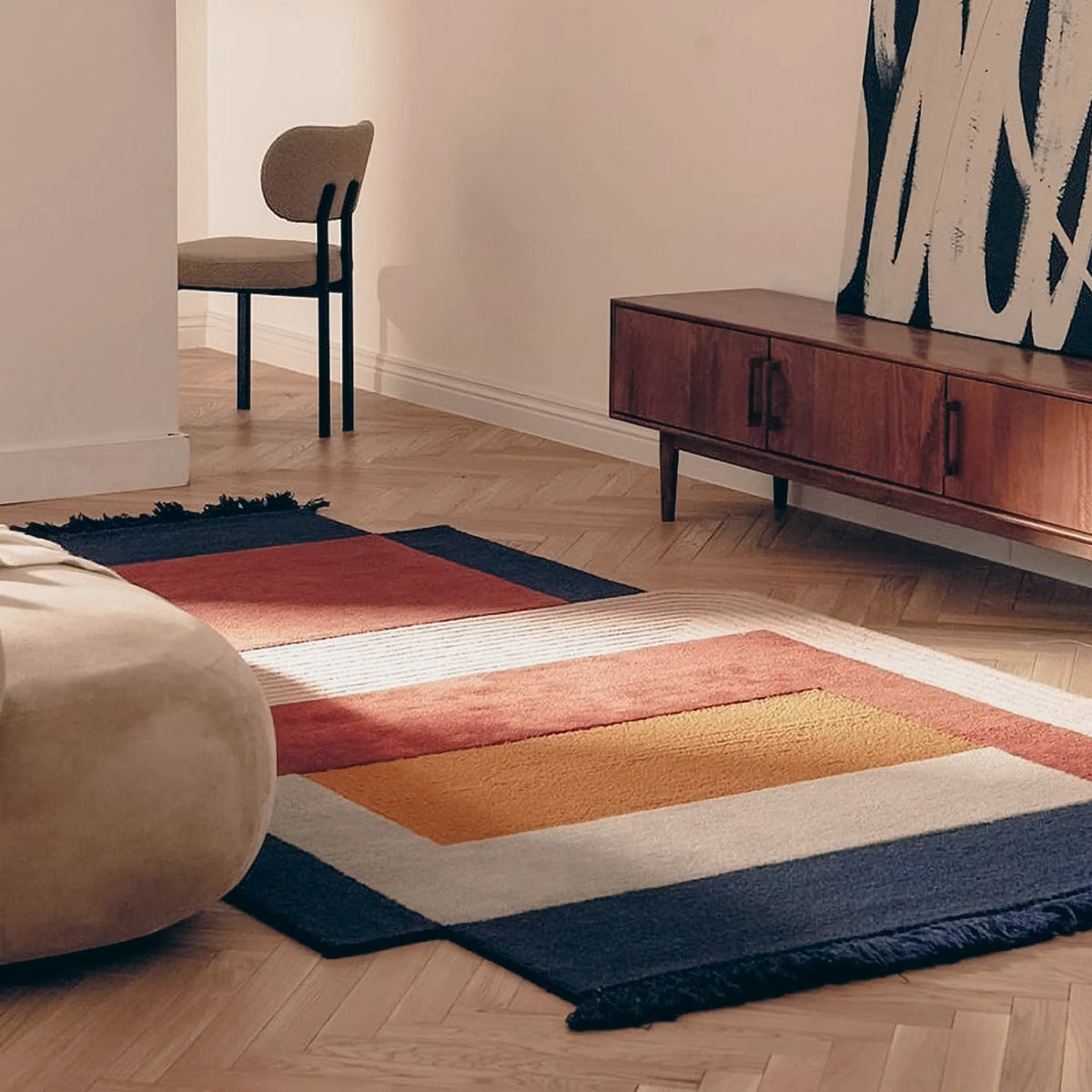

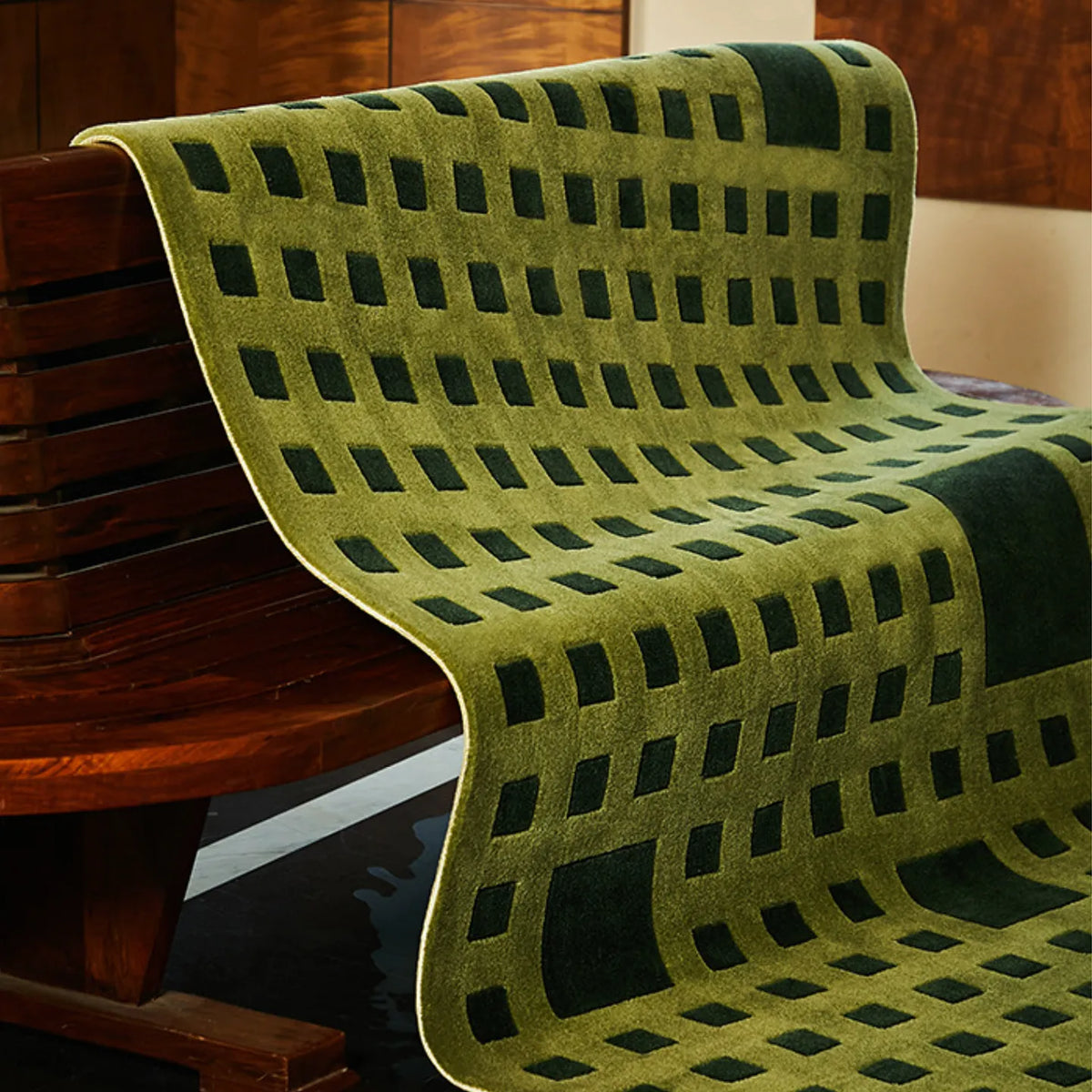

Key Takeaways
- A small rug can work beside a sofa when it acts as a local accent, not an undersized main rug.
- It does not have to sit under the sofa, but it needs a visible relationship with the seating area.
- A small rug works naturally at the open end of a sofa, beside a nearby reading chair or where someone actually puts their feet down.
- Check the available floor, the rug’s direction and the nearby walkway before deciding whether its size works.
- Colour can sit quietly with the sofa or create contrast, as long as another detail helps the room hold together.
- A larger rug remains the better choice when the sofa, chairs and coffee table need one shared anchor.
Most living-room rug advice begins with the same warning: do not go too small. The usual starting point is to extend the rug beyond the sofa and place at least the front legs on the rug. That advice makes sense when one surface is expected to hold the whole seating area together. It becomes less useful when the rug you love was never meant to do that job.
A small rug can work beside a sofa, but moving an undersized design to one side does not automatically make it an accent. It needs a local purpose, connected to how that part of the seating area is seen or used.
The Sofa Side Rugs Collection brings together smaller shaped, graphic and textured rugs chosen for these positions. At Housenfriends, the room comes first. Colour, character and surface matter once the rug has a convincing place beside the seating.
Is It a Sofa-Side Accent or a Living-Room Rug That Is Too Small?
A small rug beneath a coffee table is usually easy to diagnose. If it stops well before the sofa and chairs, the surrounding strips of bare floor expose the shortfall. Moving it a few centimetres forwards or adding a stronger pattern will not make it large enough to connect the seating.
A sofa-side accent has fewer things to connect. It may belong with one sofa arm and a floor lamp, the open end of a sectional, or a chair just outside the main arrangement. It does not have to reach the coffee table or every seat in the room.
A compact rug can look lost in the centre of a living room yet properly proportioned beside a single chair. A long narrow design may be unsuitable beneath a coffee table but useful along the exposed side of a sofa. Size makes sense only in relation to the furniture it is expected to reach.
Some rooms need one shared surface beneath the seating. Others leave a smaller, usable patch beside it. A shaped edge, dense tufting or graphic motif can hold attention there, but only if the position already makes sense. The same distinction appears around beds, doorways and other compact positions in Small Rugs for UK Flats That Make Compact Spaces Feel Intentional.
Does a Small Rug Have to Sit Under the Sofa?
Not always. The familiar front-legs-on rule applies most clearly to a rug anchoring the main seating group. Allowing the sofa and chairs to overlap that rug stops the furniture from appearing to orbit a separate island in the middle of the floor.
A sofa-side rug can remain outside the sofa legs because nearby furniture provides another connection. It may begin close to the sofa arm, sit partly beside a chair or follow the exposed edge of a chaise. One side-table leg may overlap the edge if the main design stays visible and the table remains stable.
Distance still matters. A narrow gap can keep a shaped edge visible, while a broad band of empty floor between the rug and every nearby object may leave it floating. There is no useful universal measurement because a slim sofa, deep sectional and compact chair create different proportions. View the arrangement from the doorway and the usual seat. If the rug still reads as part of the seating area from both positions, the sofa legs do not need to cover its edge.
Where Can a Small Rug Sit Beside a Sofa?
The open end of a sofa is often the clearest position. One side of the rug sits close to the seating, while the rest remains visible on the floor. The arrangement works especially well when the sofa ends beside a lamp, low table or reading chair. Those nearby objects provide context, and the rug does not have to anchor the coffee table in the centre of the room.
The space between a sofa and a separate chair can also work, provided it is wide enough for the rug and safe movement around it. Here, the rug belongs to both seats. It can mark the point where someone turns towards the chair, reaches for a book or rests their feet. If the gap is primarily a walkway, leaving it clear may be the better decision.
The Orson Cream Grey Polar Bear Shaped Tufted Rug shows why actual use matters. Beside a lounge chair positioned near the sofa, its body occupies the floor where feet naturally reach it. From standing height, the chair and bear share the same small patch of floor, while the animal remains easy to recognise.
Words can create a more playful link with the seating. On the Please Have a Seat Shaggy Graphic Word Art Rug, they should face the person approaching the sofa or occasional chair, not a wall or the underside of a side table.
Empty floor alone is not a reason to add a rug. A sofa side already crowded with a lamp, plant, basket and table may become fussy with another object at ground level. A rug behind the sofa or wedged into the gap beside a wall may barely be seen. A useful position should be visible from the room, reachable from the seating and clear of the route people actually take.
Recognisable shapes bring another practical question. A table leg may touch a paw or petal, but furniture should not hide the feature that made you choose the rug. What Makes a Shaped Rug Work Better Than a Plain Rectangle? looks more closely at how those edges behave around beds, chairs and cabinets.
What Size Works Beside a Sofa, and Which Way Should the Rug Face?
Start with the piece of floor the rug will occupy, not the full width of the sofa. Measure the available space beside the arm or chaise, then account for the route people use to enter the seating area. A rug that fits the empty rectangle on paper may still interrupt a doorway, catch a chair leg or extend into the busiest walking line.
Rug size is only useful in relation to the furniture nearby. A tiny design beside a deep sofa can appear incidental, especially when there is no chair, lamp or table to bring the scale down. Move it beside a compact armchair and the proportions may suddenly make sense.
The Eira Off White Irregular Cloud Patch High Low Rug makes the change easy to see. At 60 × 90 cm, it suits a compact spot beside one seat. The 80 × 120 cm version occupies a more noticeable area around a sofa end or chair, while 80 × 160 cm introduces a longer line. At 100 × 200 cm, Eira starts to behave less like a chair-side accent and more like a rug for the wider seating area.
The 60 × 90 cm and 100 × 200 cm versions should not be styled as though they do the same job. The smallest needs one seat close by. Longer sizes need an open route along the furniture, while the largest needs enough space to avoid becoming trapped between sofa, table and walkway.
The Oona Blue Water Sea Otter Shaped Graphic Tufted Rug adds direction to the question of size. At 62 × 130 cm, its long body can follow the open side of low seating or lie between a sofa and chair. Turn it across the main route into the room and it may interrupt movement, while the sea otter and surrounding water make an upside-down or sideways placement easy to notice.
Before settling on the layout, mark the rug’s footprint with removable tape or sheets of paper. Approach the sofa from the doorway, sit down and walk through the nearby route. A paper rectangle may fit the available floor yet still reveal an awkward turn or a design facing the wrong way.
How to Pair a Sofa Side Rug with Your Sofa
Matching the sofa exactly is rarely necessary. First decide whether the rug should sit quietly beside it or become the first thing noticed in that corner. Then look at the sofa’s colour, surface and the number of competing details already around it.
The Maisie Cream & Pale Blue Daisy Flower Shaped Rug sits at the quieter end. Cream petals can continue the softness of pale upholstery or a light floor, while the pale blue centre keeps the flower from disappearing completely. The colour relationship is gentle, but the petals still give the rug a clear identity beside a sofa or nearby chair.
A stronger colour works best when the surrounding upholstery and accessories leave it enough visual space. A plain sofa can usually accommodate more contrast than one already surrounded by patterned cushions, vivid artwork and several bright objects. In the busier room, the rug may need a quieter palette or a simpler image to avoid becoming one more competing feature.
One colour from the rug can reappear in a cushion, lamp base, artwork or throw. It need not be an exact match or occur more than once. A small echo elsewhere in the room can keep a contrasting rug from looking unrelated.
Touch matters most where bare feet actually reach the rug. A deeper tufted or shaggy surface gives that spot a softer landing and can sit comfortably beside smooth leather or plain woven upholstery. A sofa already rich in bouclé, pattern or heavy texture may suit a calmer, lower-profile surface, especially near a busy walkway or where chair legs move across the edge.
Construction also changes how the design is noticed. Tufting gives colour and shape more physical depth, while a flatter printed surface can keep graphic lines clearer. Neither automatically makes a better sofa-side rug. The useful choice depends on whether the position calls for softness underfoot, a crisp image or less height. Tufted Rugs vs Printed Rugs: What’s the Difference? looks more closely at how both constructions behave on the floor.
When a Larger Living-Room Rug is the Better Choice
A larger rug is the better choice when the seating needs to read as one group. If the sofa faces two chairs across a coffee table, a rug beneath the centre can connect all four elements more effectively than a small accent placed at one side. It also gives several people the same underfoot surface, which may matter more than highlighting one corner.
The small rug is probably being asked to do too much if it sits beneath the coffee table with wide gaps before every seat. An open-plan room presents a similar problem when the rug occupies the visual centre but has no furniture on or near it. Placing it centrally suggests that it should connect the seating, yet its edges stop too far away.
A larger rug can also simplify a busy layout. Several small floor accents may divide an already compact living room into unrelated patches. One continuous rug beneath the main furniture can make the arrangement easier to understand, even though it covers more floor.
If you already own a small rug you love, moving it beside a chair is one option, not an obligation. It may work better in a bedroom, dressing area or hallway. It may also sit over a larger, quieter rug if both layers remain flat and secure underfoot. Keeping it in the living room only makes sense when it belongs with something people use.
Before choosing one, view the available floor from the doorway and from the seat itself. A convincing position will keep the rug visible, give it a practical connection to the seating and leave the walking route clear. Explore the Sofa Side Rugs Collection, then compare each rug’s measurements and direction with the way that part of your room is actually used.


0 comments