

Key Takeaways:
- Green rugs bring colour, texture and natural character into UK homes without needing a full room redesign.
- Moss green rugs add depth through layered colour, texture and high-low pile.
- Leaf rugs and monstera rugs bring a clear botanical shape into bedrooms, nurseries and smaller spaces.
- Daisy rugs and floral rugs soften the floor with flower shapes, lighter colour and playful movement.
- Moss, sage, olive and dark green rugs respond differently to light, furniture and room size.
- Nature-inspired green rugs offer an alternative to traditional Persian, vintage and floral green rug styles.
Search for green rugs and the same few looks appear again and again: faded Persian patterns, plain sage rectangles, vintage washes, tropical prints and dark traditional florals. They all have their place, but in many UK homes they can feel heavier than expected. A small bedroom, a grey sofa, pale flooring, low winter light, a rented flat with very little architectural detail; those rooms often need lift rather than weight.
That is where green starts to feel useful in real homes. Cream walls, pale wood, beige upholstery and grey sofas can all look tidy, yet still leave a room feeling a little unfinished. A green rug gives the floor something warmer to hold onto. It can make a bedside area feel less bare, give a reading corner a proper centre, or make a hallway feel considered before anything else changes.
Are Green Rugs a Good Idea for UK Homes?
Plenty of people hesitate over a green rug the first time they consider one. Yes, green rugs are a good idea for many UK homes, especially when the shade has some natural depth and the surface has texture. Green adds colour, but it usually sits more easily than red, orange or bright blue. Moss green rugs, olive green rugs and botanical greens also work with materials already common in UK interiors: oak, cream, beige, linen, rattan, warm white walls, pale floors and soft grey upholstery.
The shade matters, of course. A very flat green can look severe under low light, especially on a large rug. A green with movement inside it feels easier. Mossy tones, olive undertones, carved pile, mixed greens and irregular outlines all help the rug settle into the room instead of sitting on top of it.
In winter, deeper greens can make a room feel more grounded. In spring and summer, lighter greens and botanical shapes feel fresh beside open windows, cotton bedding and small indoor plants. That seasonal flexibility is part of green’s appeal. It brings enough colour to change the mood, but it rarely forces the whole room to revolve around it.
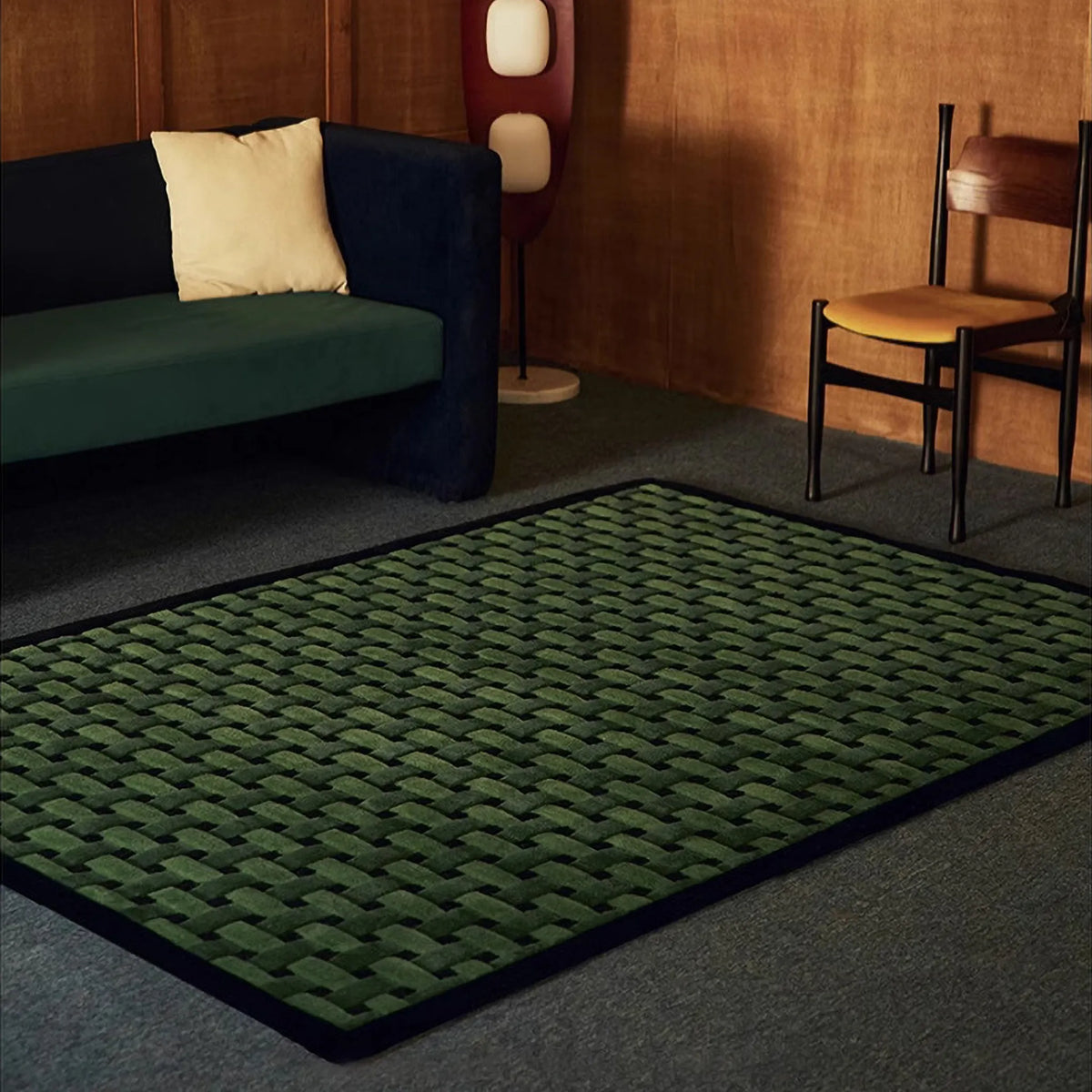
Marlow Deep Green Mossbank Rug shows how this works in practice. The green is deep, but the surface has enough pile variation and tonal change to soften it. Beside cream bedding, pale oak or a quiet sofa corner, it gives the room depth without turning into a heavy dark rectangle.
Green Rugs Collection brings these ideas together, from moss green rugs and botanical shapes to sculpted textures and graphic green styles.
Why Green Rugs Feel More Alive Than Many Neutral Rugs
Walk into a lot of newly decorated bedrooms and the palette often looks almost identical. Cream walls, beige bedding, light oak furniture, soft grey somewhere in the mix. Everything works together, yet the room can still feel unfinished.
The walls already have colour. The furniture brings texture. Bedding softens the room. Then there is the floor, often stretching across a much larger area than people realise once everything else is in place.
In a living room, the effect is similar. A grey sofa, a pale floor and a white wall can feel tidy but a little bare. Add a green rug with layered tones or a sculpted surface, and the sofa area starts to feel more settled. The green picks up wood, plants, books, cushions and natural light in a way a flat neutral rug often does not. Books, plants and natural wood often stand out more clearly once green enters the floor palette, particularly in smaller rooms where every object carries a little more visual weight.
Merryn Green Moss Garden Round Tufted Rug works well in that kind of space. The round shape breaks away from the usual rectangle, while the green surface shifts slightly as the light changes. Beside a low chair, near a window or in a bedroom corner, it gives the room something more living to respond to.
Moss, Floral and Leaf Rugs Add Life in Different Ways
Put a moss rug, a leaf rug and a daisy rug into the same room and the result changes surprisingly quickly. One creates depth across the floor, another changes the outline of the space, while the third brings a softer shape around the furniture.
A moss rug changes the way the floor is read
Beside pale oak furniture or cream bedding, the edges become less obvious. Darker sections sit back slightly. Lighter pile catches more of the available light. Small changes in height create shadow across the surface. The eye keeps moving instead of stopping at one flat shade of green.
The effect becomes more noticeable in bedrooms and quieter living spaces. A solid green rectangle can sometimes feel like an object placed on the floor. A moss-inspired rug feels more woven into the room itself, particularly when wood, linen and softer neutrals are already doing some of the work.
Alder Green Blue Pondside Rug shows this quite well. From one angle the blue-green sections become more visible. From another, the deeper moss tones take over. The surface changes throughout the day in a way a printed green rug rarely does.
Much of that depth comes from construction as well as colour. High-low tufting creates small shifts in height across the surface, creating deeper shadow and more variation across the rug. Tufted Rugs vs Printed Rugs: What’s the Difference? explores why carved pile, layered texture and raised details often create a more natural-looking result than a printed surface alone.
For a deeper look at moss texture specifically, What Makes a Moss Rug Look Like Moss? Texture, Shape and Layered Green explains how moss green rugs use pile, outline and layered colour to feel more natural.
A leaf shape becomes part of the room
A monstera leaf rug changes the outline of the floor immediately, particularly in rooms where most furniture already follows straight lines. Beds, cabinets and shelving tend to create plenty of rectangles. A leaf silhouette introduces something softer without adding visual clutter.
This works especially well in children’s rooms, nurseries, bathrooms and small bedrooms. A standard rectangle can feel stiff in those spaces, particularly when there is already a bed, cabinet or bath creating hard lines. A leaf shaped rug gives the floor a softer edge and a more playful point of focus.
Cassia Forest Green Monstera Leaf Irregular Tufted Rug sits in that space between graphic and botanical. The leaf silhouette is clear, but the green and cream tones make it easier to place with pale wood, simple bedding or a neutral floor. It brings the plant shape into the room without relying on a busy printed pattern.
Daisy rugs change the shape before they change the colour
A daisy rug beside a bed or dressing table changes the room before any new furniture is added. The outline softens the floor, the petals give the area a clearer shape, and the colour decides how playful or quiet the rug feels.
Maisie Green Daisy Flower Shaped Rug keeps the floral feeling connected to plants and garden colour. Within the wider floral rug category, daisy rugs tend to feel lighter and more open than traditional floral patterns, particularly in bedrooms and smaller spaces. The shape brings character, while the green keeps it from feeling overly sweet. Beside cream bedding, a small lamp or a child’s reading area, it adds a lighter kind of life than a darker moss rug.
For more detail on this shape, Why Daisy Rugs Feel More Versatile Than You Might Expect looks at how daisy rugs work across bedrooms, softer corners and playful spaces. Floral Rugs Collection and Daisy Rugs Collection offer more styles in a wider range of colours and sizes if the flower shape is the part that feels most appealing.
What Colours Go With Green Rugs?
Warm white, cream, oatmeal, beige, taupe, soft grey, brown and wood tones all help green feel settled. These combinations work because they echo things people already recognise: leaves against timber, moss beside stone, green near linen, plants against warm walls.
A moss green rug beside cream bedding and pale oak furniture often feels at home almost immediately. Olive green tends to pull warmth from walnut, darker timber and beige upholstery, while sage sits more comfortably in brighter rooms where pale walls and natural daylight are already doing a lot of the work. Dark green usually asks for a little contrast around it, whether that comes from lighter flooring, cream upholstery or warmer lighting.
Grey sofas are common in UK homes, and green can make them feel less cold. Moss green and olive green work especially well because they add warmth without clashing with the grey. If the room already has black accents or darker furniture, a green rug with lighter sections or carved texture usually feels easier than one solid dark shade.
Which Green Rug Shade Works Best: Moss, Sage, Olive or Dark Green?
A bedroom with cream bedding, pale oak furniture and soft morning light often pulls green in one direction. A deep, uniform green can feel heavier than expected once it reaches the floor. Greens with a little variation usually settle more comfortably into that kind of space because the colour changes slightly as daylight moves across the surface.
In bedrooms, reading corners and quieter living spaces, moss green often feels less fixed than a solid dark green. Darker sections fall back, lighter areas catch more light, and the floor gains depth as the day changes. The effect becomes even stronger when the rug includes carved pile, layered greens or an irregular outline.
Marlow works well in rooms like these. The green looks deeper around the carved sections and softer where more light reaches the pile, so the surface never feels completely static.
Sage green usually appears in brighter rooms. Warm white walls, light wood and generous daylight already create a softer atmosphere, and a paler green tends to sit comfortably alongside them. In some spaces that feels fresh and effortless. In others, particularly when everything else is also pale, the rug can disappear more than intended.
Olive green often looks different once it sits beside natural materials. Walnut furniture, beige upholstery, woven textures and darker timber bring out the warmth in the colour. The green feels richer and more established, almost as though it has always belonged in the room.
Dark green asks for a little more balance. Put it beside cream upholstery, lighter flooring and warmer lighting and it can look rich and substantial. Place the same rug in a room already dominated by darker furniture and the overall effect becomes noticeably heavier.
The boundaries between these shades are not always as clear as the colour names suggest. Many of the strongest green rugs move between several tones at once. Elowen Mint Green Woodland Rug shifts between lighter woodland greens across the surface, while Alder introduces blue-green variation that changes depending on the angle and available light.
The same green can look surprisingly different from one room to another. Morning light, darker flooring, pale bedding, timber furniture and the size of the space all change the way the colour feels once the rug is down.
Why Green Rugs Work Especially Well in Bedrooms and Softer Spaces
A bedside rug usually has a fairly simple job. You notice it when your feet touch the floor in the morning. You notice it when the room feels cold. You notice it when that patch beside the bed still looks empty after everything else has been finished.
Green tends to work well there because bedrooms already contain softer materials. Linen, cotton, wool, wood and warmer lighting all help green settle naturally into the room. The rug does not have to fight for attention. It just needs to make the floor feel warmer and more considered.
Smaller bedrooms often benefit most from this. The floor is usually more visible, the furniture sits closer together and every object carries more visual weight. Shape and texture become noticeable much faster than they would in a large open-plan room.
Reading corners work in a similar way. A green rug under a low chair, near a side table or by a window gives the area a reason to exist. Moss textures feel more tucked-in. Leaf shapes feel lighter and more botanical. Daisy rugs add a softer, more playful note where the room needs one.
Can Green Rugs Still Feel Modern Instead of Vintage?
Green rugs often get pulled into a traditional visual world. Persian-style patterns, faded washes, dark florals and plain sage rectangles still dominate many search results. Those styles suit plenty of interiors, but they are only one version of green.
Modern green rugs can be more graphic, sculpted or playful. A checkered green rug brings structure. A wavy green rug softens a living room. A moss rug adds texture. A leaf shaped rug brings a botanical silhouette. A daisy rug adds a softer flower outline. Green becomes part of the design language, not simply the colour choice.
This matters for homes that feel too plain for a traditional rug. A studio flat with clean furniture, a small bedroom with pale bedding or a hallway with very little decoration may need green in a fresher form. A vintage rug might feel too formal there, while an irregular green rug or sculpted tufted rug gives the room more personality.
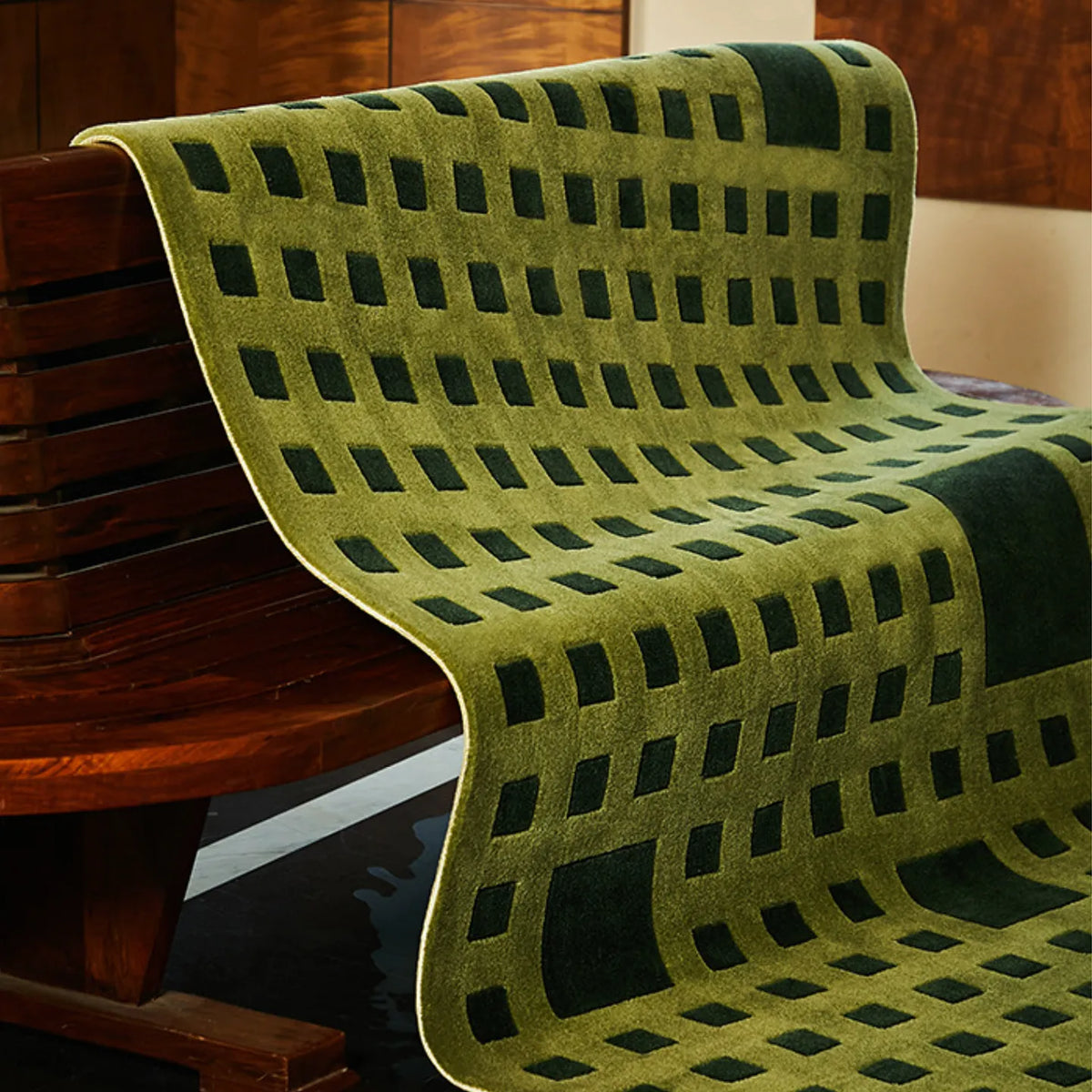
Noor Green Black Mint Checkered Irregular High Low Wool Rug shows the graphic side of green. It uses green with black, mint and checked structure, so the result feels modern rather than botanical. Arden Green & Black Polka Dot Scalloped Rug moves in a more playful direction, using shape and contrast to keep the green from feeling traditional. Green can feel vintage, botanical, graphic, playful, mossy or sculpted depending on the surface, outline and colour mix.
Why Nature-Inspired Green Rugs Feel Different From Traditional Green Rugs
For a long time, green rugs occupied a fairly predictable corner of the market. A traditional floral pattern. A faded Persian design. A vintage-style rug with sage or olive tones running through it. Even when the shade changed, the overall feeling often stayed quite similar.
Those rugs are still popular, and for good reason. They work beautifully in period homes, character properties and rooms that already lean towards a more traditional style.
Green started appearing through different shapes and surfaces. Moss-inspired rugs brought texture into the conversation. Botanical leaf rugs used the outline itself as part of the design. Flower shaped rugs moved away from the standard rectangle altogether.
Once the rug is on the floor, the green starts coming through the raised sections, softer edges and uneven surface. Texture begins carrying some of the visual weight that colour used to carry on its own. Moss textures create shadow across the floor, botanical outlines soften a room full of straight lines, and flower-shaped rugs change the feel of a corner before any furniture moves.
For a broader look at this idea, How Floral, Leaf and Moss-Inspired Rugs Add Shape and Life to a Room shows how vivid, artful rugs can bring more character, energy and visual life into a room.
Green Rugs That Make a Room Feel More Alive, Beyond More Colourful
A green rug often starts as a colour decision, but the room usually responds to the surface, shape and mood once the rug is on the floor. Moss adds depth near the ground. Leaf shapes loosen up straight furniture lines. Daisy rugs bring a softer rhythm to bedrooms and quiet corners.
For the broadest starting point, browse Green Rugs Collection. For rugs inspired by moss, leaves, flowers and organic forms, continue through Nature-Inspired Rugs Collection.


0 comments